
Introduction
In the competitive world of nonwoven fabric manufacturing, efficiency is the cornerstone of profitability. For operators of a needle punch production line, two goals are paramount: increasing output and reducing waste. Achieving these goals not only boosts your bottom line but also enhances product quality and consistency.
Whether you produce geotextiles, carpet backing, synthetic leather, or coir mattress materials, even small improvements in your needle loom process can yield significant returns. This guide provides actionable strategies to optimize your needle punching machine for maximum efficiency and minimal waste.
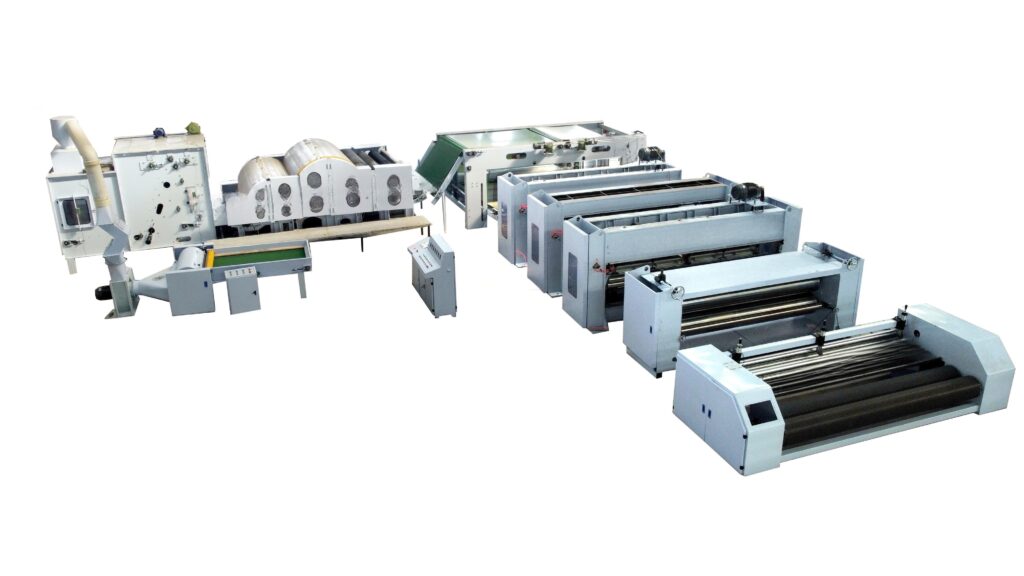
1. Optimize Fiber Preparation and Web Formation
A uniform web is the foundation of efficient needle punch nonwoven production. Inconsistencies here cause problems throughout the entire process.
- Fiber Blending: Ensure a consistent and homogeneous blend of fibers. Inconsistent blending leads to weak spots and variations in fabric density, increasing the risk of web breakage.
- Carding/Carding Crosslapper Calibration: The carding machine must deliver a web with exceptional uniformity. Regularly check and maintain the carding wires. For crosslappers, ensure the traverse speed and layering are perfectly synchronized to create a web with minimal variation in weight (gsm). A uniform web allows for higher line speed without compromising integrity.
Action: Implement regular checks on web CV (Coefficient of Variation) value. A low CV value indicates a uniform web, which is crucial for high-speed production.


2. Strategic Needle Selection and Maintenance
The needles are the heart of your needle punching machine. Using the wrong needle or a worn-out one is a primary source of waste and quality issues.
- Needle Type: Select the right needle based on your fiber type and desired fabric finish. Key choices include:
- Gauge: Finer gauges for fine fibers, heavier gauges for coarse fibers like coco coir.
- Barb Configuration: The number, angle, and placement of barbs determine how much fiber is transported. Choose a configuration that provides the right balance of entanglement and surface finish.
- Needle Board Setup: Ensure needles are correctly installed and the board is balanced. An unbalanced board causes vibration, noise, and uneven punching.
- Preventive Replacement: Don’t wait for needles to break. Establish a scheduled needle replacement program based on running hours or production volume. Worn barbs reduce punching efficiency, forcing you to slow down the line speed to achieve the same consolidation, thus reducing output.


3. Fine-Tune Needle Punching Parameters
Precise control of the punching process is where major gains are made.
- Punch Density: This is the number of needle penetrations per cm². It’s calculated based on strokes per minute, the number of needles, and web speed.
- Too High: Can damage fibers, create excessive dust, and increase energy consumption.
- Too Low: Results in poor fiber entanglement and weak fabric strength.
- Penetration Depth: Adjust how deep the needles penetrate into the batting. Optimal depth ensures maximum fiber entanglement without striking the base plate, which blunts needles.
- Stroke Frequency vs. Line Speed: Find the perfect synergy. Increasing stroke frequency allows you to increase line speed while maintaining the same punch density, directly boosting production output.
Action: Keep detailed logs of parameter settings for different products. This allows for quick and precise setup changes, reducing downtime during product transitions.

4. Implement Proactive Maintenance and Monitoring
A well-maintained needle loom is a productive and efficient machine.
- Scheduled Downtime: Regularly inspect and service key components like the eccentric gear system, main bearings, and drive belts. Preventive maintenance is far cheaper than unplanned downtime.
- Dust Removal: An effective dust removal system is critical. Accumulated fiber dust can interfere with moving parts, cause overheating, and pose a fire risk. It also represents lost raw material—a direct source of production waste.
- Vibration and Temperature Monitoring: Use sensors to monitor the health of your machine. Abnormal vibrations or temperatures can be early warning signs of impending failures.
5. Leverage Process Control and Data Analysis
Move from reactive to proactive management with data.
- Online Monitoring Systems: Modern needle punch lines can be equipped with systems that monitor web weight, thickness, and line speed in real-time, allowing for immediate adjustments.
- Track Key Performance Indicators (KPIs): Closely monitor metrics like:
- Overall Equipment Effectiveness (OEE)
- Material Yield (ratio of finished product to raw material input)
- Downtime Frequency and Causes
- Analyzing this data helps identify bottlenecks and areas for improvement in your nonwoven manufacturing process.
Conclusion: A Strategy for Sustainable Growth
Increasing output and reducing waste in your needle punch line is not a one-time task but a continuous process of optimization. By focusing on raw material uniformity, precise needle selection, meticulous process control, and rigorous maintenance, you can significantly enhance the productivity and profitability of your nonwoven fabric plant.
Partner with an Expert: As specialists in high-performance nonwoven production machinery, we provide not only reliable needle punch lines but also the expert technical support and process optimization advice you need to succeed. Contact us today to learn how our machines and knowledge can help you achieve your production goals.