
In the textile manufacturing sector, effective machinery maintenance is critical for ensuring operational efficiency, product quality, and long-term equipment reliability. Whether you operate nonwoven production lines, spinning machinery, or coir processing systems, a structured maintenance approach minimizes downtime and extends machine life. This guide covers key maintenance types, essential tools, and best practices to keep your production running smoothly.
What is Machinery Maintenance?
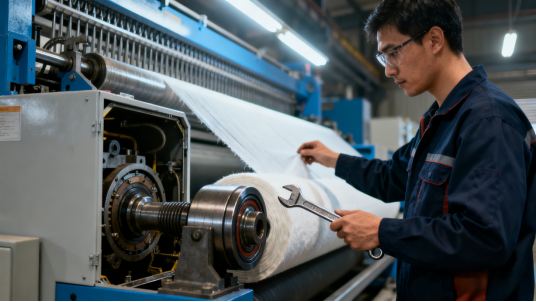
Maintenance refers to the systematic activities performed to keep equipment and machinery in optimal working condition. In textile engineering, it involves regular inspection, servicing, and repair of machines to prevent failure, sustain performance, and ensure consistent output—whether for nonwoven, spinning, or coir production lines.
Key Objectives of Maintenance
- Maintain factory machinery and equipment in peak operating condition.Ensure product quality and adherence to delivery schedules.
- Minimize machine downtime and control production timelines.
- Keep the production cycle within the targeted range.
- Enable machinery modifications to meet evolving production needs.
- Reduce idle time caused by breakdowns.
- Improve product quality and reduce operational costs.
- Sustain optimal machine speed and production efficiency.
Types of Maintenance in Textile Manufacturing
1. Preventive Maintenance
A scheduled and proactive approach where equipment is regularly inspected and serviced to prevent potential failures. This is essential for continuous production in areas such as:
- Nonwoven needle punch lines
- Thermobonding nonwoven machinery
- Coir fiber processing systems
- Spinning and medical cotton equipment
2. Breakdown Maintenance
Repairs are conducted only after a machine has failed. This approach may be suitable for non-critical equipment where stoppages don’t significantly disrupt production or cause major losses.
3. Routine Maintenance
Scheduled checks performed at regular intervals—for example, every 30 days for dyeing machines—based on maintenance plans developed by expert engineers. This ensures critical components are regularly assessed and serviced.
Essential Maintenance Tools & Equipment
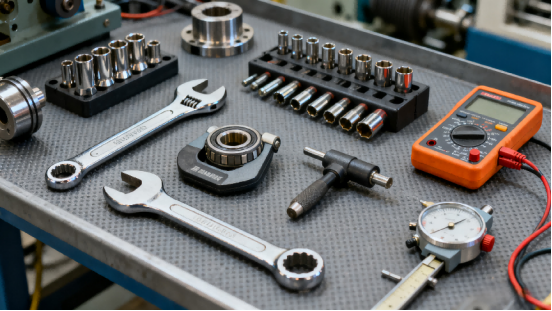
| Tool/Equipment | Primary Function |
| Adjustable Wrench | Adjusting nuts and bolts |
| Pipe Spanner | Pipe fitting |
| Spanner & Socket Set | Fastening nuts and bolts |
| Hammer | Applying impact force |
| Screwdriver | Loosening or tightening screws |
| Punch | Fitting worn-out shafts |
| Bearing Lock Tool | Removing bearing clips |
| Hacksaw | Cutting metal parts |
| Calipers & Vernier Scale | Precise diameter measurements |
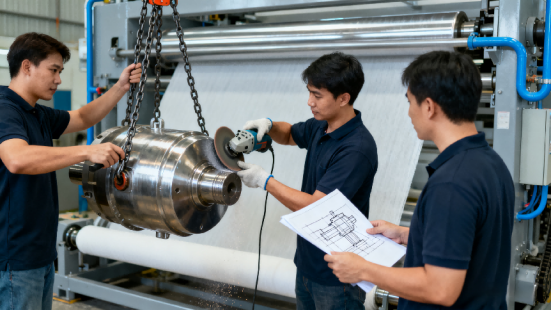
| Chain Hoist | Lifting heavy machine parts |
| Welding Machine | Joining metal components |
| Grinding Machine | Smoothing surfaces |
| Electrical Tester | Checking circuits |
| Pliers | Gripping or cutting wires/parts |
| Avometer/Multimeter | Measuring voltage and current |
| Chisel & File | Metal cutting and surface finishing |
| Gasket Cutter | Cutting gaskets for sealing |
Maintenance Workflow: From Problem to Solution
A clear and efficient process helps resolve issues quickly and systematically:
Problem Identified →Reported by Operator →Reviewed by Supervisor →Assessed by Production Officer →Actioned by Maintenance Officer →Solution Implemented
This workflow ensures accountability and swift response—key for maintaining uptime in automated lines such as needle punch machines, thermobonding systems, and coir production units.
Why Maintenance Matters for Your Textile Business
Regular maintenance not only prevents unexpected breakdowns but also supports consistent product quality and machine longevity. This is especially important for manufacturers using specialized equipment like:
- Nonwoven fabric production lines
- Spinning machinery for cotton and synthetic fibers
- Coir and coconut fiber processing systems
- Medical cotton and nonwoven medical fabric machines
Investing in a solid maintenance culture helps reduce costs, improve output, and strengthen your reputation for reliability.
Conclusion
From spinning and nonwoven machinery to coir and medical textile production systems, proper maintenance is a non-negotiable part of sustainable manufacturing. By implementing preventive and routine maintenance strategies—and equipping your team with the right tools—you can enhance productivity, ensure quality, and extend the life of your textile machinery.
Looking for reliable nonwoven, spinning, or coir processing equipment? Explore our range of high-performance machinery and integrated production solutions designed for efficiency and ease of maintenance.