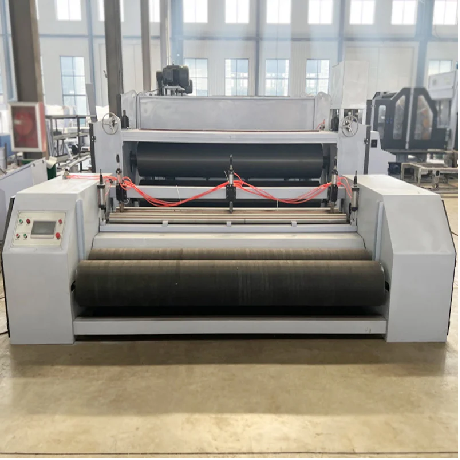
The production process of non-glue fiber is roughly as follows:
Bale opener→Pre-opener→Mixer→Fine opener→fiber feeder→Carding machine→Cross lapper→Thermal bonding oven→Ironing machine→Winding machine
Specific customization is required according to customer needs.
This production line is specially designed for manufacturing glue-free fiber products, which are widely used in apparel, bedding, furniture, and other applications. The oven section supports both electric and gas heating, and utilizes a top-blowing, bottom-suction system with through-air circulation for high thermal efficiency, increased output, and superior product quality.
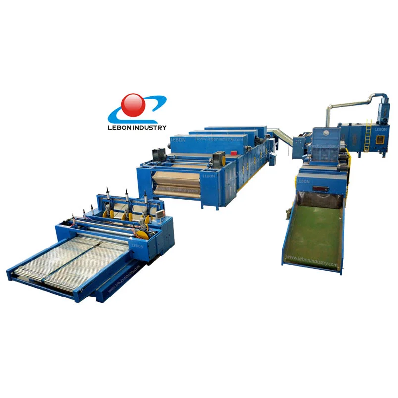
Bale opener
- Bale opener: Opens various fiber bales, weighs them proportionally via an electronic scale, and spreads them evenly onto a blending conveyor. Fibers are then fed by a pressing roller and a pair of feed rollers, loosened by a high-speed beater, and transported by a fan to the next stage.
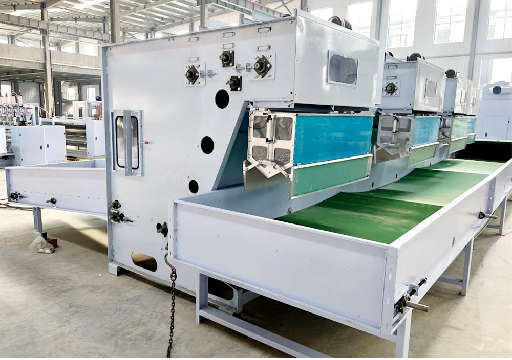
Opening machine
- Opening machine: Equipped with a specially developed alloy card clothing system and fan-based transport. Feeding is managed via a wooden or leather conveyor with photoelectric control. Two grooved rollers and two spring-loaded pressure devices ensure steady feeding. The opening rollers are dynamically and statically balanced, and the fully enclosed design minimizes the need for frequent cleaning.
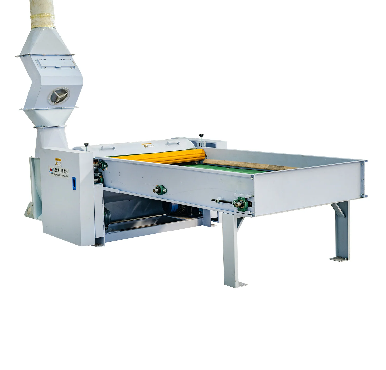
Vibrating feeder
- Vibrating feeder: Further loosens and blends the opened fibers, forming a uniform fiber mat for subsequent processing. It features volumetric metering, photoelectric control, easy adjustment, and consistent fiber distribution.
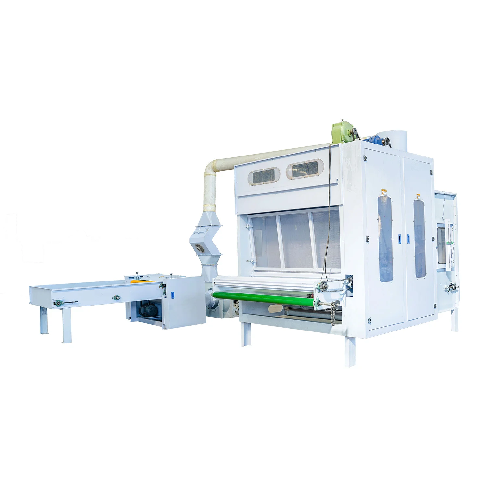
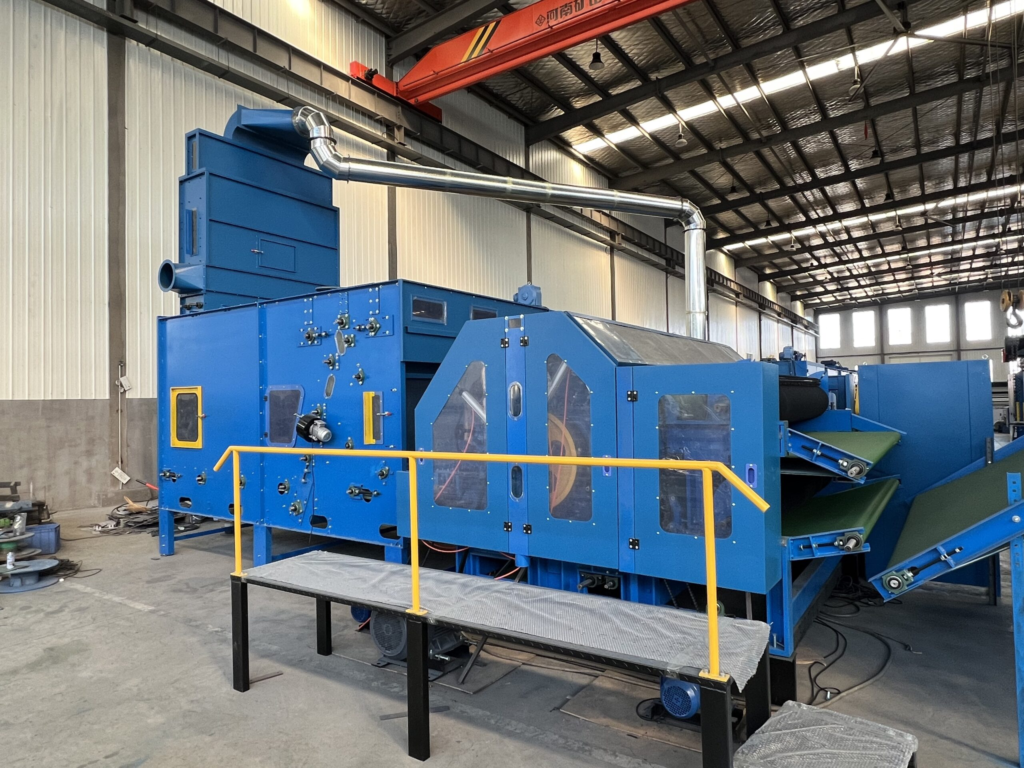
Carding machine
- Carding machine: Configured with a single cylinder, double doffers, four workers/strippers, and roller stripping. All rollers are heat-treated and precision-machined. The cast iron side frames are fitted with high-quality domestic card clothing. A suction system reduces fiber accumulation and cleaning frequency, and the machine includes a maintenance platform for robust carding performance and high output.
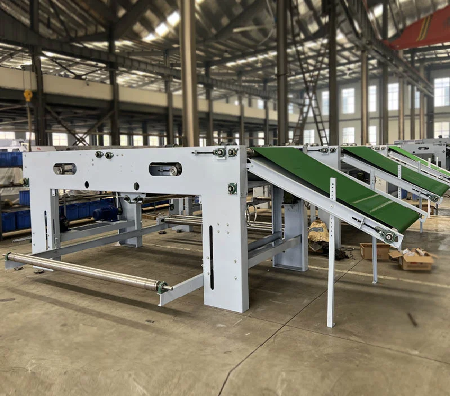
Cross lapper
- Cross lapper: Constructed from 6mm thick steel plates, it includes a compensation motor between the conveyor curtains to minimize web draft. Reciprocating motion is frequency-conversion controlled for smooth reversal with buffering and multi-speed adjustment. The bottom conveyor is height-adjustable to lay the fiber web evenly according to the required weight per unit area. High-grade leather curtains are used for the oblique and flat conveyors, while wooden curtains are used for the base and ring conveyors.
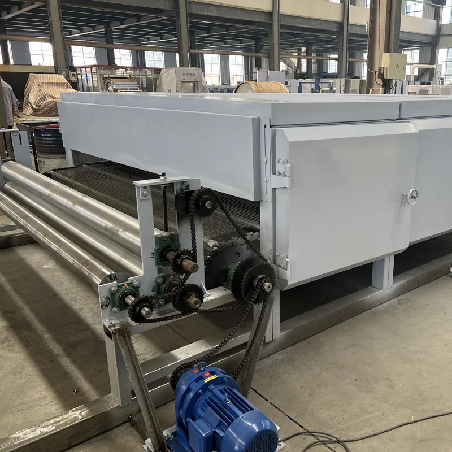
Oven
- Oven: Ensures uniform heating of the product at high temperatures for consistent thermal bonding or drying.
Cutting and winding machine
- Cutting and winding machine: Built with an all-steel plate frame integrating the drive and control systems. It employs three hard cutters for longitudinal slitting and one flying shear for transverse cutting, controlled by an electronic meter. The machine is compact, structurally simple, and aesthetically designed.