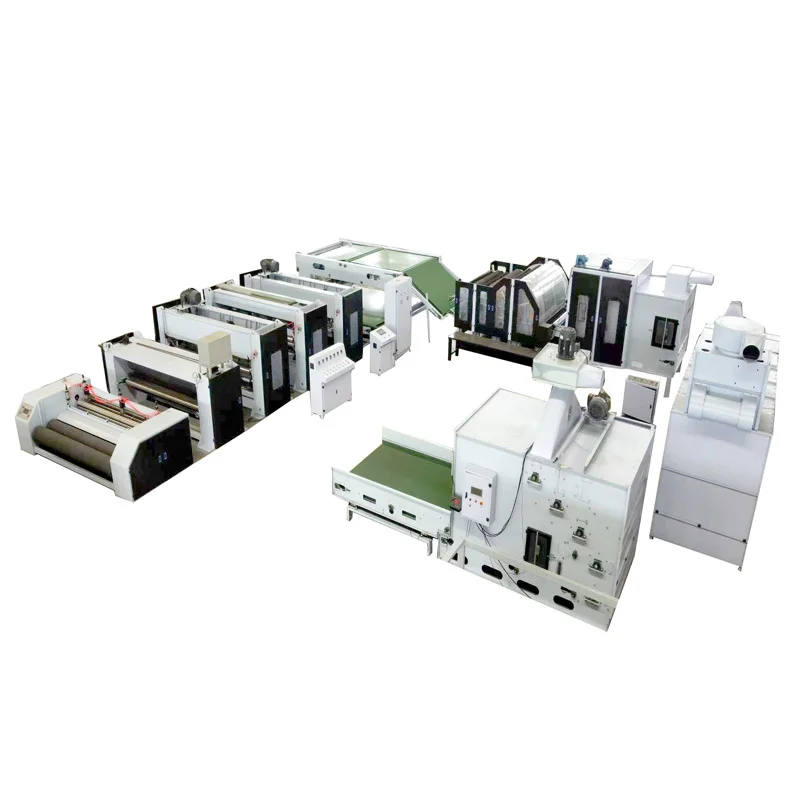
Introduction: A Costly Decision That Requires Careful Planning
Investing in a nonwoven machine is one of the most significant decisions for any textile manufacturer. The right equipment drives profitability, product quality, and market competitiveness. However, the wrong choice can lead to years of frustration, high operating costs, and missed opportunities. Unfortunately, many buyers make preventable errors during the purchasing process. This article highlights five common mistakes when buying a nonwoven machine and provides practical advice to avoid them. By learning from others’ experiences, you can make a confident, informed investment in your nonwoven production line.
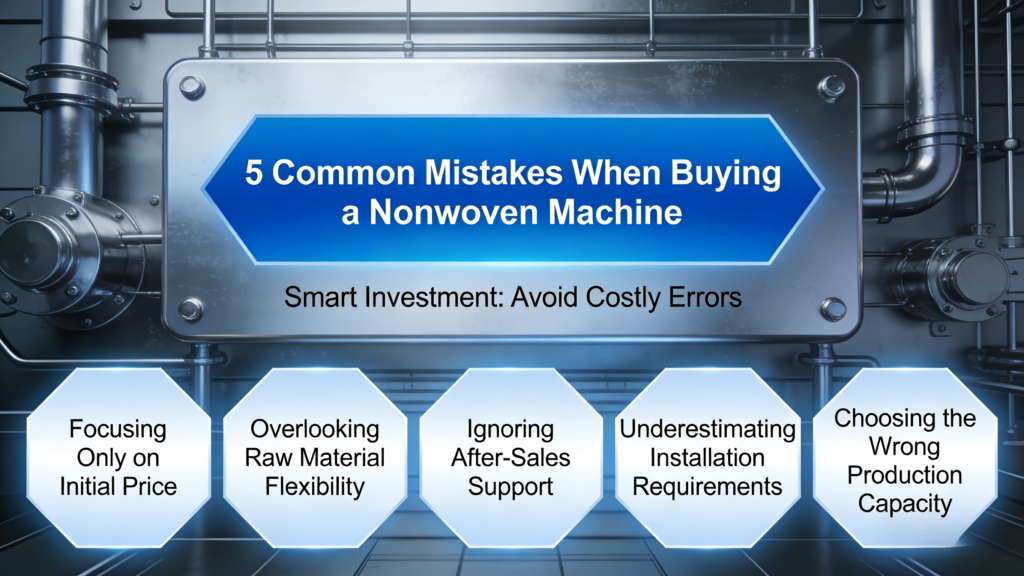
Mistake 1: Focusing Only on the Initial Purchase Price
The first and most frequent mistake is comparing nonwoven machine prices without considering long-term costs. A cheaper machine often comes with higher energy consumption, frequent breakdowns, and expensive spare parts. Consequently, the total cost of ownership over five years may exceed that of a more expensive, higher-quality machine.
How to Avoid It:
Calculate the total cost of ownership before making a decision. Include energy costs, maintenance expenses, spare parts availability, and expected downtime. Ask potential suppliers for energy consumption data per kilogram of output. A slightly higher upfront investment in an efficient nonwoven production line typically pays back within two to three years through lower operating costs.
Mistake 2: Overlooking Raw Material Flexibility
Many buyers purchase a nonwoven machine designed for a specific fiber type without considering future needs. For example, a line optimized for virgin polypropylene may struggle with recycled fibers or natural materials like cotton or viscose. This limitation locks you into one raw material source, which is risky when prices fluctuate or supply chains disrupt.
How to Avoid It:
Choose equipment that handles a range of fiber types and lengths. For a needle punch line, ensure the carding machine and cross lapper can process both synthetic and natural fibers. For a spunbond line, verify that the extruder and spinnerets can accommodate different polymers. This flexibility protects your business against market changes and opens opportunities for customized nonwoven fabric production.
Mistake 3: Ignoring After-Sales Support and Spare Parts Availability
A nonwoven machine is a long-term asset that requires ongoing maintenance. Some buyers focus entirely on the machine specifications but neglect to evaluate the supplier’s service network. When a critical component fails, waiting weeks for a spare part or technical support can halt production and destroy profitability.
How to Avoid It:
Before signing a contract, ask specific questions. Does the supplier have a local service representative or partner? What is the typical lead time for common spare parts like needles, rollers, or bearings? Does the supplier provide training for your operators and maintenance team? A reliable nonwoven machinery manufacturer offers clear service agreements and maintains a local spare parts inventory. Investing in strong after-sales support is as important as the machine itself.

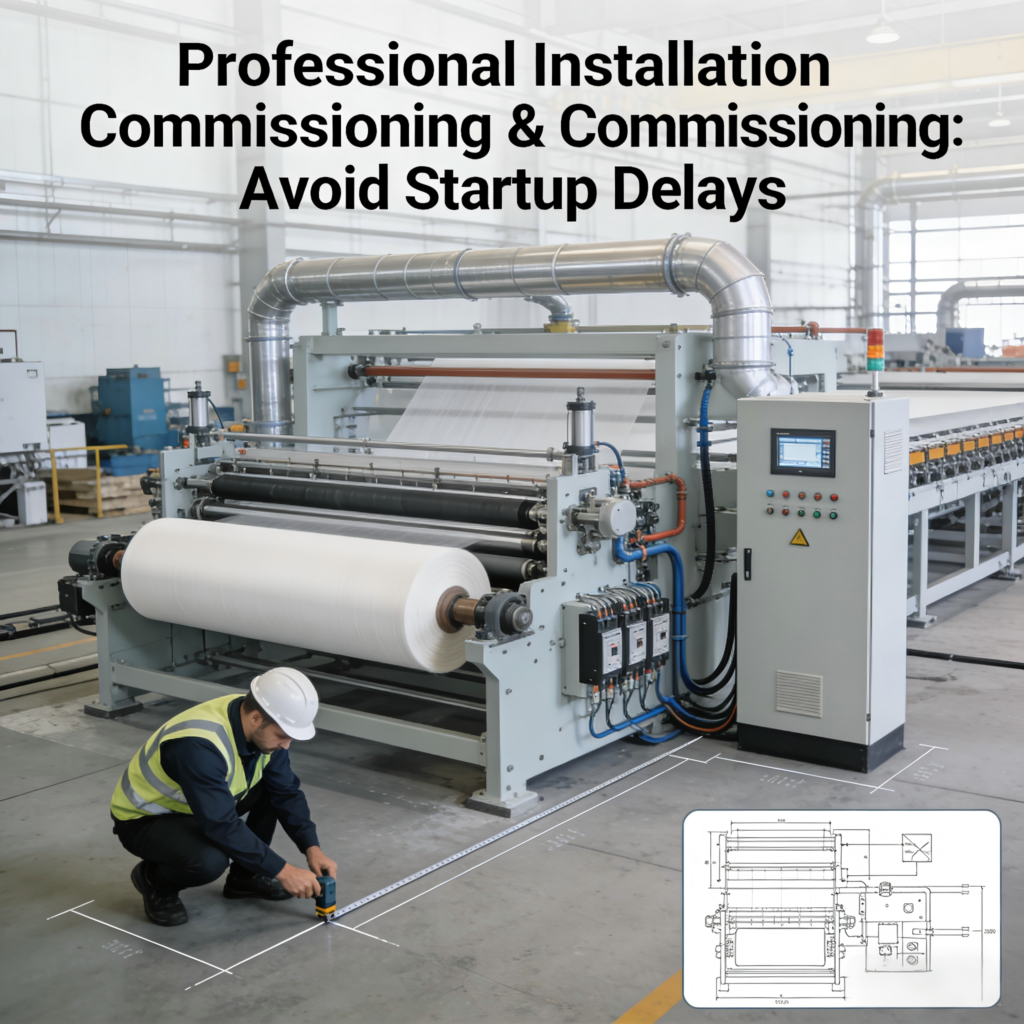
Mistake 4: Underestimating Installation and Commissioning Requirements
Some buyers assume that a nonwoven production line arrives ready to run. In reality, proper installation requires adequate floor space, correct power supply, compressed air, ventilation, and skilled personnel. Ignoring these requirements leads to startup delays, poor performance, and even safety hazards.
How to Avoid It:
Request a detailed site preparation checklist from your supplier before delivery. Ensure your facility meets all specifications for space, utilities, and environmental controls. Plan for the supplier’s installation team to spend one to two weeks on site for commissioning and training. Budget for these preparatory activities. A smooth startup saves months of troubleshooting and accelerates your return on investment.
Mistake 5: Choosing the Wrong Production Capacity
Buyers often select anonwoven machinewith either too little or too much capacity. Undersized equipment cannot meet demand, forcing you to run overtime or turn away orders. Conversely, an oversized line operates below efficiency, wasting energy and increasing cost per kilogram.
How to Avoid It:
Analyze your market forecast realistically. Consider your current sales and projected growth over three to five years. Then, choose a nonwoven production line that operates efficiently at 70-80% of its maximum capacity. This buffer allows for peak periods without overloading the machine. Discuss modular expansion options with your supplier. Some lines allow adding extra heads or bonding stations later, providing a growth path without replacing the entire system.
Conclusion: Make a Smart Investment for Long-Term Success
Purchasing a nonwoven machine is a complex process, but avoiding these five common mistakes puts you on the path to success. Remember to evaluate total cost of ownership, prioritize raw material flexibility, verify after-sales support, prepare your facility properly, and select realistic capacity. Each of these steps protects your investment and ensures your nonwoven production line delivers consistent, profitable output for years.
We specialize in helping customers navigate the purchasing journey. Our nonwoven machinery combines energy efficiency, material versatility, and robust after-sales support. From needle punch lines to spunbond systems, we offer tailored solutions that match your specific market and budget.
Ready to buy your nonwoven machine with confidence? Contact us for a free consultation and a detailed proposal designed to avoid costly mistakes.