
Industrial and automotive nonwovens are widely used in applications such as automotive interiors, filtration, insulation, and protective fabrics. But which machines are essential to produce these nonwovens efficiently and at high quality?
Producing nonwoven fabrics involves several key steps: fiber opening, web formation, bonding, and finishing. The choice of machinery directly affects product consistency, mechanical strength, and suitability for industrial or automotive applications. Understanding the different types of machines helps manufacturers optimize production efficiency, maintain quality, and meet demanding specifications.
Core Machines for Industrial Nonwoven Fabric Production
Carding Machines
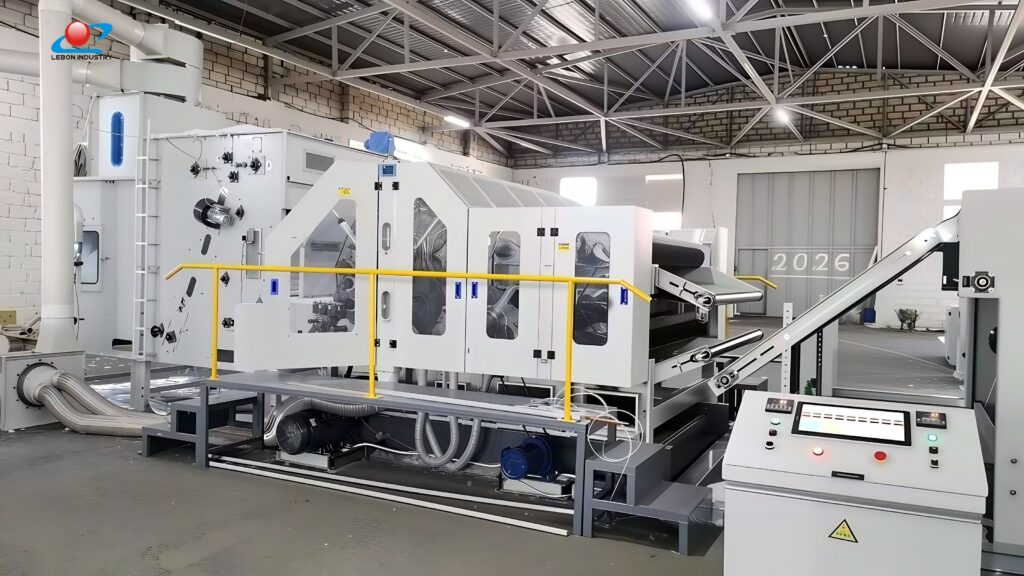
Carding machines are essential for the initial fiber preparation. They open raw fibers, align them into a uniform web, and remove impurities. Proper carding ensures consistent thickness, strength, and uniformity, which is vital for applications such as industrial insulation, protective pads, and automotive soundproofing materials.
Needle Punch Machines
Needle punch machines mechanically interlock fibers using barbed needles. This process is suitable for heavy-duty nonwovens applied in automotive carpet backings, insulation pads, and protective layers. Needle punching ensures structural stability, high durability, and excellent dimensional consistency.
For industrial-scale solutions, our nonwoven machines deliver precision, reliability, and consistent output for diverse nonwoven applications
For efficient automotive nonwoven production, our fabric making machine ensures high-speed, precise output with optimized fiber management.
Material Considerations for Nonwoven Applications
Nonwoven performance is highly dependent on fiber type and web structure. Common fibers include polypropylene, polyester, and recycled fibers. Choosing the correct fiber type ensures optimal mechanical strength, uniformity, and compatibility with bonding processes.
Optimizing Nonwoven Production
Web Formation and Fiber Distribution
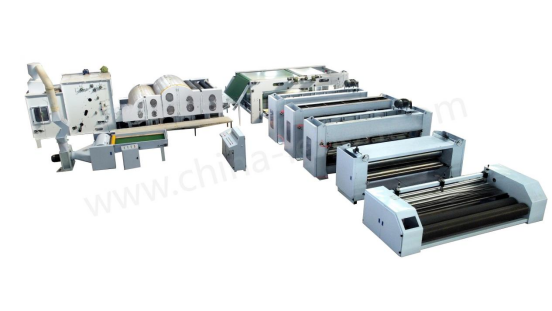
Uniform fiber distribution ensures consistent fabric properties. Carding and airlay systems align fibers evenly before bonding, reducing defects and improving fabric strength.
Bonding and Strengthening
Mechanical, thermal, or hydroentanglement bonding increases durability and dimensional stability. Selecting the appropriate bonding method depends on end-use requirements and performance targets.
Automation and Quality Control
Modern production lines integrate automated monitoring, tension control, and inline quality inspection. Automation reduces waste, minimizes downtime, and ensures consistent quality for industrial and automotive nonwovens.
For large-scale and precise production, our nonwoven fabric machine ensures uniform fiber control, high efficiency, and reliable output.
For custom production guidance, get in touch with our experts to select the ideal machine configuration for your project.