
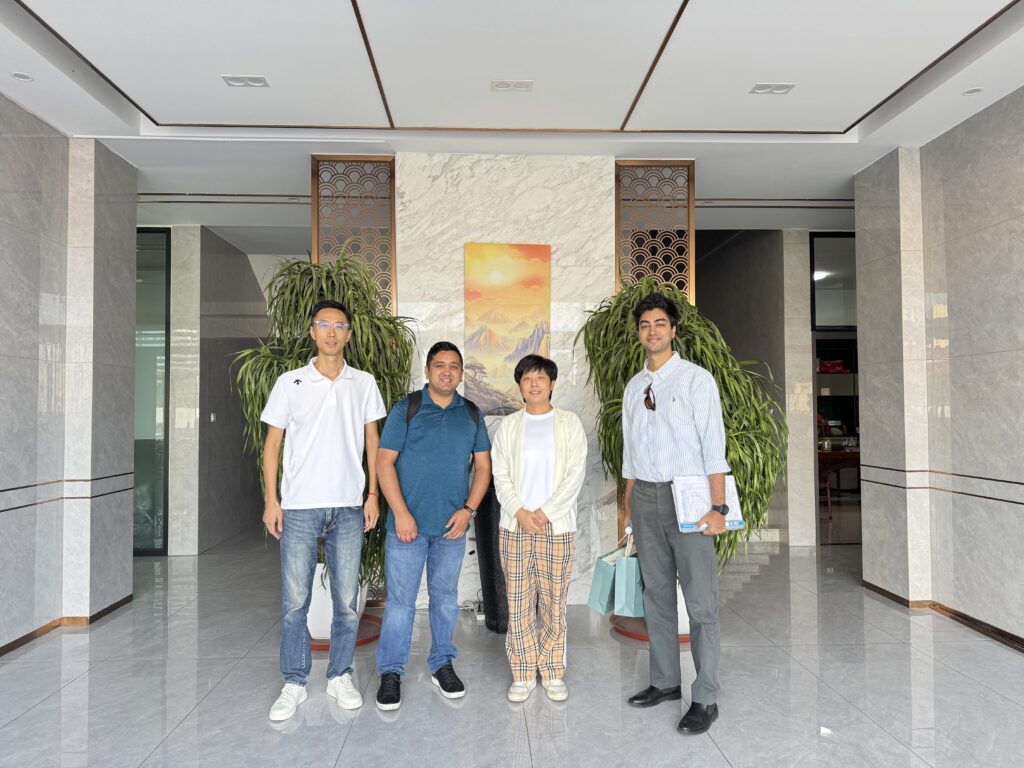
Customers of textile manufacturers from Nepal recently visited Qingdao LEBON Industry Co., Ltd. to inspect the company’s microfiber polyester wadding production line. LEBON engineers walked the customer through the complete 8-stage nonwoven process — from fiber opening to roll winding — demonstrating the line’s capacity to produce 3-meter-wide wadding in weights of 100–800 gsm for bedding, garment interlining, and furniture padding.
Background: Growing Demand for Microfiber Wadding in South Asia
South Asia’s textile industry is expanding rapidly, and with it the demand for high-quality polyester wadding — the lightweight, resilient fiberfill used in quilts, pillows, sofa cushions, winter apparel, and automotive interiors. Nepal, in particular, has seen a rise in bedding and garment manufacturers seeking cost-effective, in-house production of imitation silk cotton wadding rather than relying on imported finished rolls.
What Is a Microfiber Wadding Production Line?
A microfiber wadding production line transforms loose polyester staple fiber into a continuous, uniform, thermally bonded wadding web. The process — sometimes called “thermal-bonded nonwoven wadding production” — uses no chemical binders, relying instead on heat and pressure to fuse low-melting-point fibers with regular polyester. The result is a soft, breathable, padding material with excellent resilience and loft retention.
Stage 1 — Fine Opening Machine: Gentle Fiber Loosening
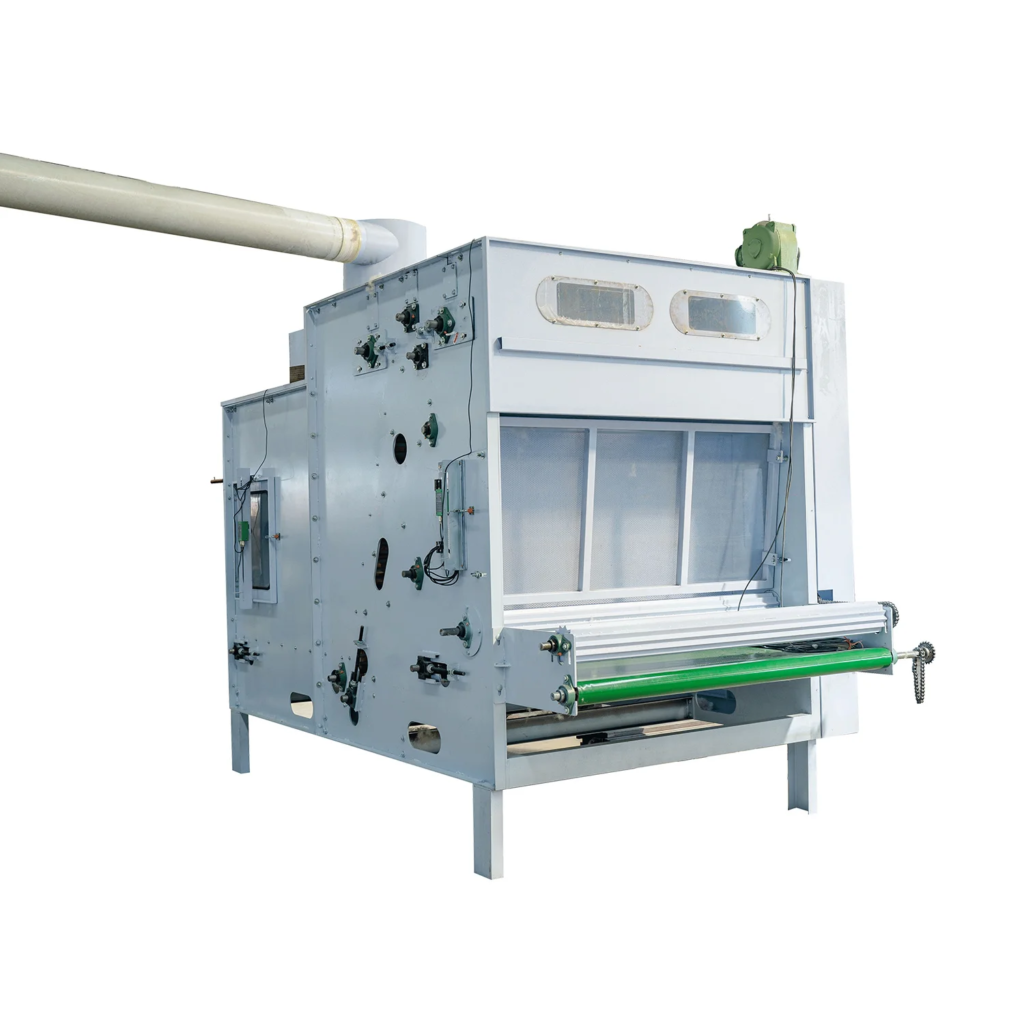
The line begins with the opening machine, which loosens polyester fiber and prepares it for downstream processing. A built-in strong magnet captures metal impurities, protecting downstream equipment. With a 1,200 mm working width and 150–500 kg/h capacity, it matches the throughput of the entire line.
Stage 2 — Feeding Machine: Even, Constant-Weight Delivery
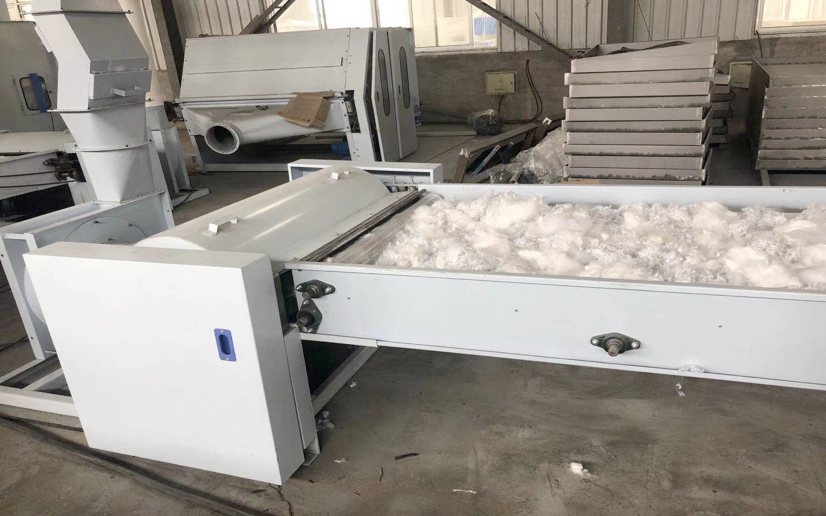
The feeding machine (equipped with a condenser) receives the opened fiber, blends it thoroughly, and delivers a uniform cotton layer to the carding section. A photoelectric constant-weight control system combined with a vibrating plate ensures the feeding quantity remains even and accurate.
Stage 3 — Single-Cylinder Double-Doffer Carding Machine: The Heart of the Line
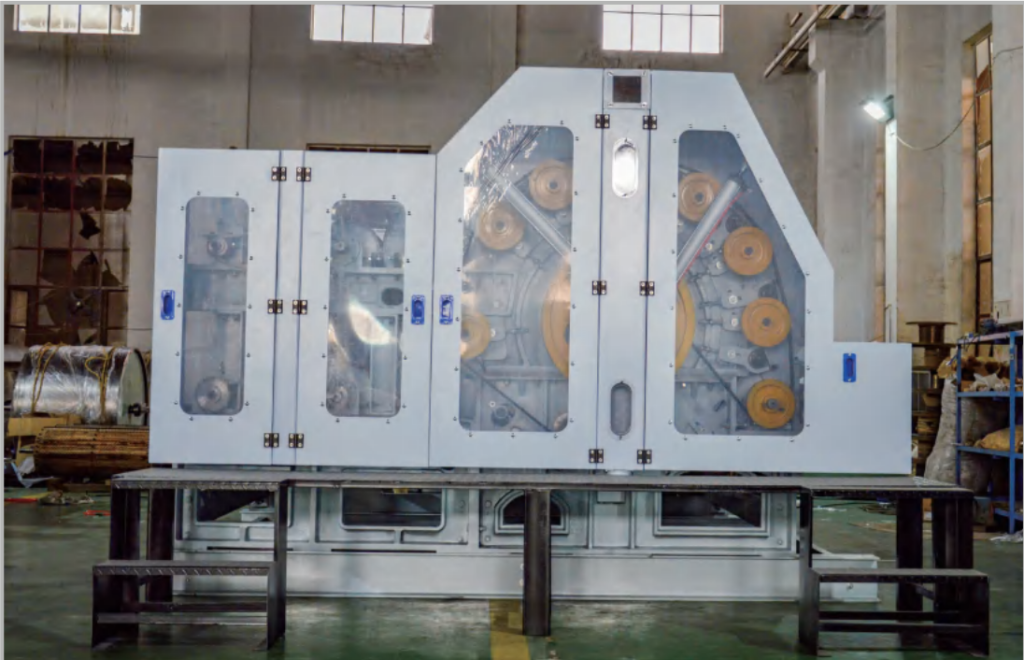
Carding is where loose fiber is transformed into a coherent, even web. LEBON’s single-cylinder double-doffer carding machine handles 1.5–20D × 38–65 mm synthetic fibers — covering the full range of microfiber and standard polyester used in imitation silk cotton wadding. The large φ1,230 mm cylinder enables high-speed combing that fully separates and aligns fibers, while two doffers (φ492 mm) peel off the web. A frequency-conversion-fed feed roller and anti-metal protection device safeguard both quality and the machine itself. Output speed: 20–50 m/min.
Stage 4 — Cross Lapper: Building Thickness and Strength
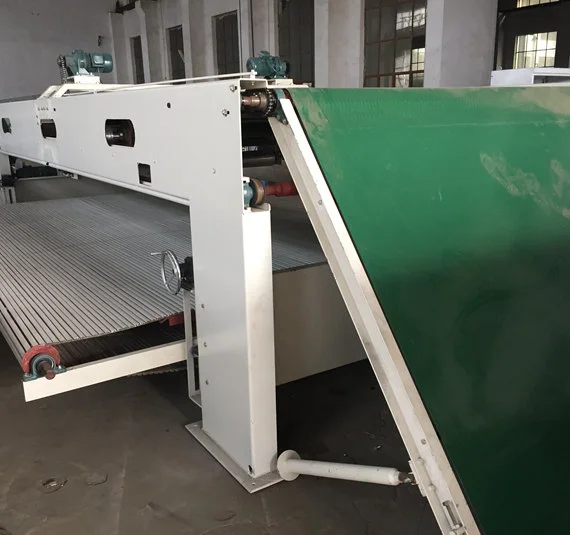
To achieve the desired wadding thickness and weight, the cross lapper folds and paves the carded web in multiple layers. LEBON’s cross lapper features separately-driven paving aprons for easy adjustment, frequency-conversion-controlled reciprocal commutation, and a leak-proof rail design. It accepts an input apron width of 1,500–2,200 mm and outputs a web 2,500–3,500 mm wide at a lapping speed of 40 m/min, before pressurizing the multi-layer web for transfer to the oven.
Stage 5 — Thermal-Bonding Oven: Setting the Wadding Structure
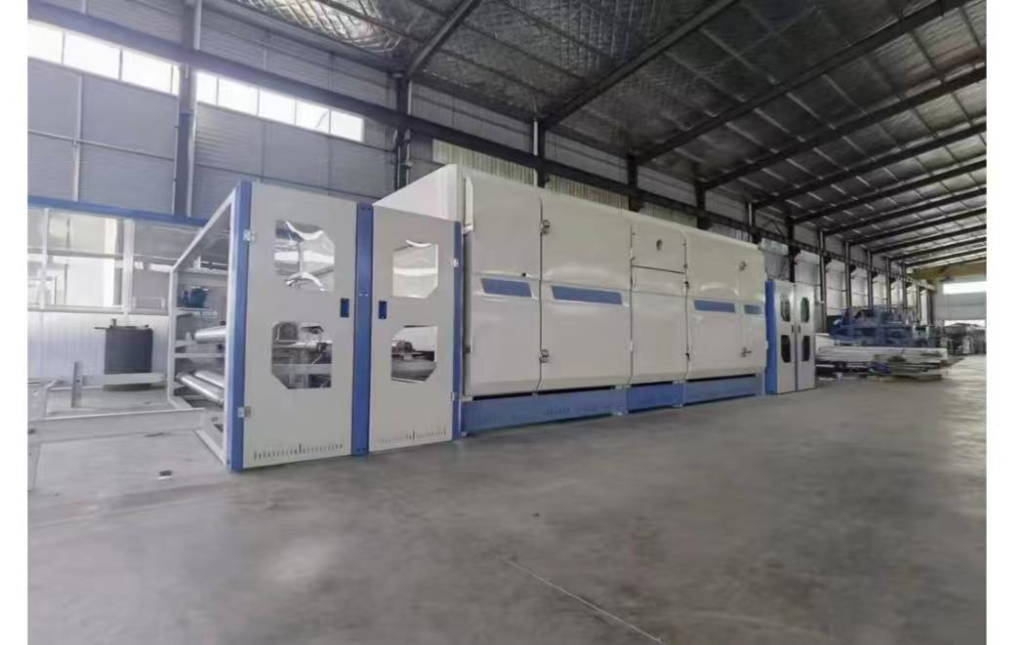
The oven is where the layered web is thermally bonded. LEBON’s electric-heating oven uses a single-layer Teflon-coated chain board to hold the folded layer in shape during heating, with a working width of 3,500 mm and a 5-meter effective heating box. Key engineering highlights the Nepal customer examined on-site include:
- Three-layer mesh belt driven by high-temperature-resistant bearings for smoother, more stable transmission.
- S-shaped cloth feeding method (versus traditional straight-through feeding) that retains heat and saves energy.
- A “one-suction, three-blowing” air duct structure that maximizes heat-utilization efficiency.
- An independent deviation-correction device and emergency-stop protection on each mesh belt, extending belt lifespan and improving safety.
- A compact three-dimensional three-layer structure that saves valuable workshop floor space — an advantage the customer specifically noted for their own facility planning.
Stage 6 — Ironing Machine: Smoothing and Densifying
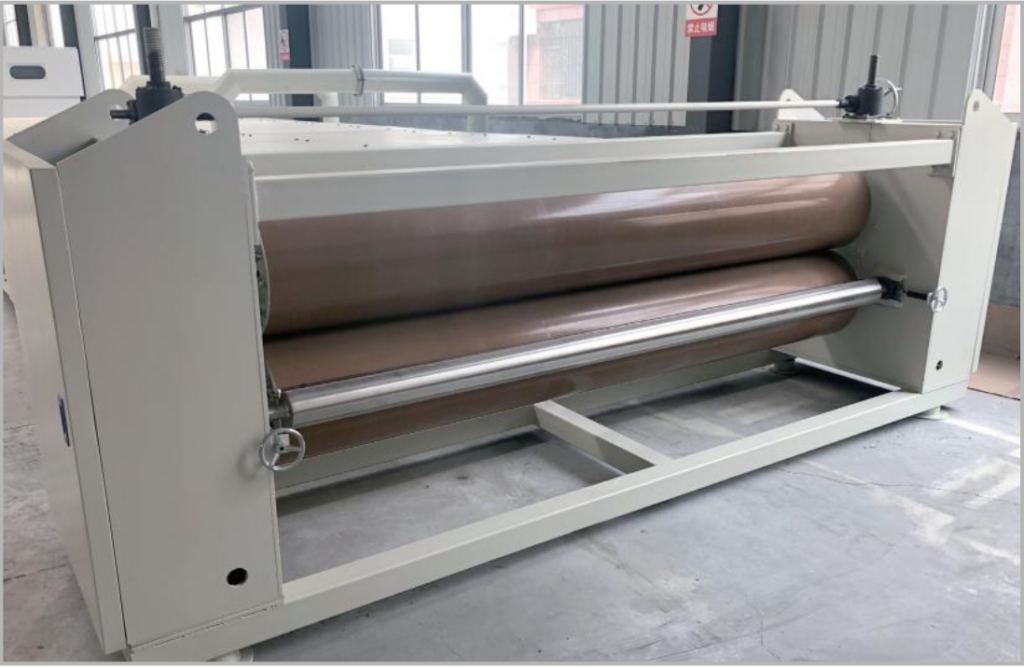
After the oven, the ironing machine applies controlled heat and pressure to refine the wadding’s thickness, surface appearance, and physical properties. LEBON’s two-roller ironing machine features frequency-conversion speed control, automatic temperature control (≤220 °C, variation ≤±2 °C), hermetic thermal oil for perfectly even heating, and Teflon coating roller surfaces. Available in working widths from 2,000 to 7,000 mm, it processes at a linear speed of 1–25 m/min.
Stage 7 — Air Cooling Machine: Stabilizing the Web
The air cooling machine uses a 5.5 kW cold-air fan with top-and-bottom blowing and a bottom ring-curtain web-feeding mechanism. Frequency-conversion speed control (3,500 mm working width, 7 kW total power) ensures the web is cooled evenly before winding.
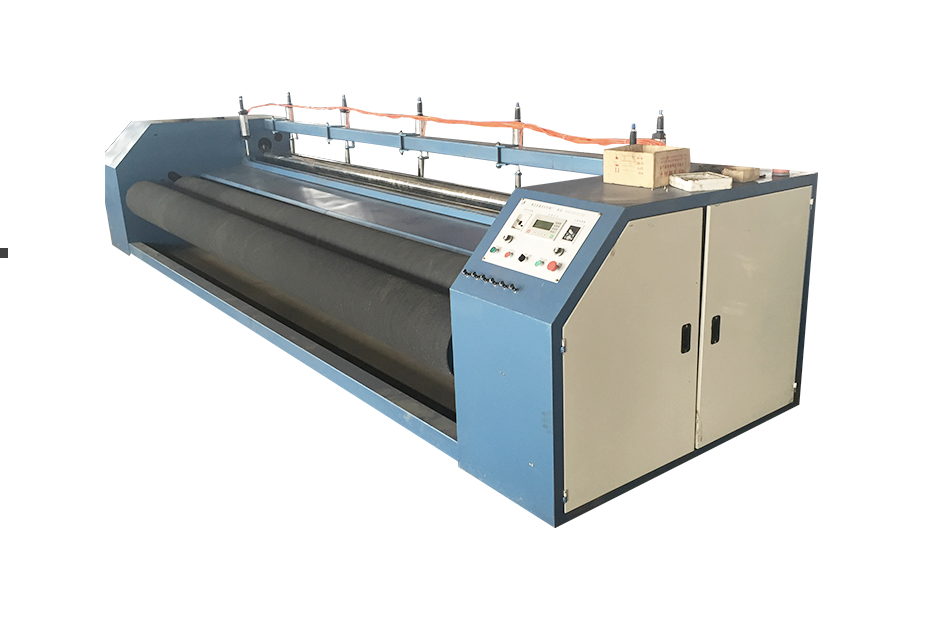
Stage 8 — Winding & Cutting Machine: Ready for Shipment
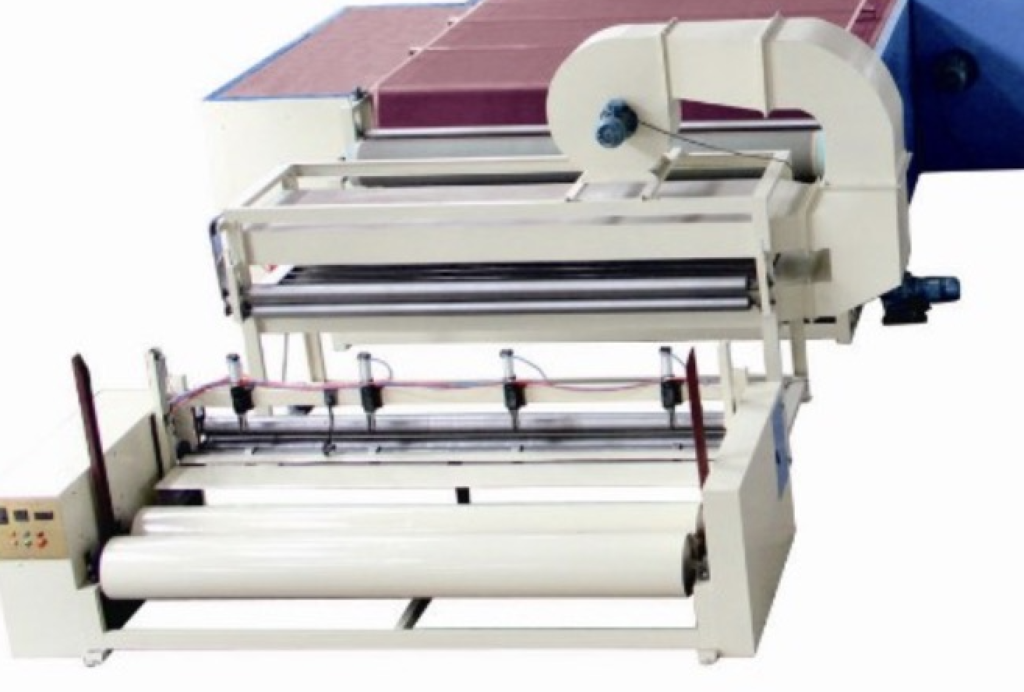
In the final stage, the winding and cutting machine trims the wadding to the required width and rolls it to the specified length for packing and shipment. With a 2,500–3,500 mm machine width, φ350 mm coiling roller, and 1–15 m/min linear speed, this stage delivers finished 3-meter-wide rolls in weights from 100 to 800 gsm — ready for the customer’s bedding, apparel, or furniture production.
Planning Your Own Wadding Production Line?
Whether you’re producing bedding, garment interlining, or furniture padding, LEBON can configure a complete polyester wadding production line to your specifications — from fiber type and GSM range to workshop footprint and energy source.
We welcome factory visits by appointment. Book a tour of our Qingdao facility and see the wadding production line in operation.