
Introduction: The Importance of Spinning Frame Selection
Selecting the right spinning frame is one of the most important decisions for any spinning mill. This machine directly determines your yarn quality, production capacity, and long-term profitability. However, with many models and configurations available, the choice can feel overwhelming. Therefore, a systematic approach is essential. This article provides a practical buyer’s checklist to help you choose the right spinning frame for your specific needs. By following these steps, you can avoid costly mistakes and invest with confidence.

1. Define Your Yarn Count Range
Before you evaluate any spinning frame, you must know your target yarn counts. Different machines perform better at different count ranges. For example, some frames excel at fine counts (Ne 60 and above). Others are optimized for medium or coarse counts. If you plan to produce a wide range, look for a frame with flexible drafting systems. Consequently, you should list your current and future yarn counts. This step narrows down your options significantly.
2. Determine the Required Spindle Count for Your Spinning Frame
The number of spindles on a spinning frame determines its output capacity. First, estimate your daily production target. Then, calculate how many spindles you need based on the yarn count and machine speed. However, more spindles also mean higher power consumption and a larger footprint. Therefore, balance capacity with available floor space and energy supply. Additionally, consider future expansion. A frame with modular sections allows you to add spindles later without replacing the entire machine.
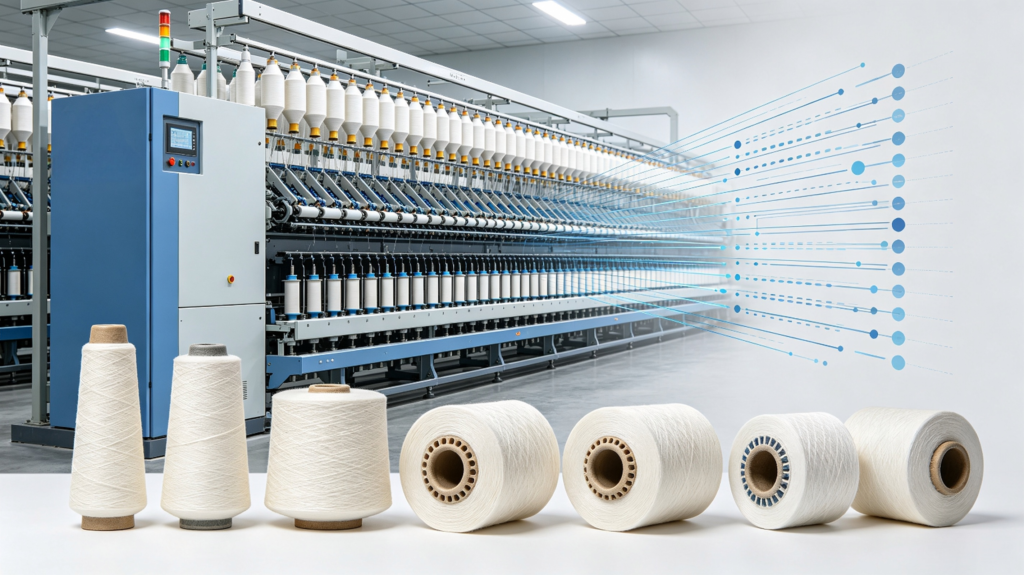
3. Evaluate Automation Level for Your Spinning Frame
Automation is a key differentiator among spinning frame models. Basic frames require manual doffing and piecing. Highly automated frames feature automatic doffing, piecing, and even online monitoring. For many mills, automatic doffing reduces labor costs and improves consistency. However, higher automation increases the initial investment. Therefore, assess your labor availability and wage costs. If skilled workers are scarce, automation pays back quickly. If labor is abundant and cheap, a semi-automatic frame may be more cost-effective.
4. Check Energy Efficiency and Power Consumption
Energy is a major operating cost in spinning. Therefore, you should compare the power consumption of different spinning frame models. Look for frames with high-efficiency motors and inverter drives. Also, check the energy consumption per kilogram of yarn. A frame that uses 10% less energy can save significant money over its lifetime. Moreover, some manufacturers offer energy-saving modes for low-speed operation. Always request power consumption data from suppliers. Then, calculate the total cost of ownership over five years.
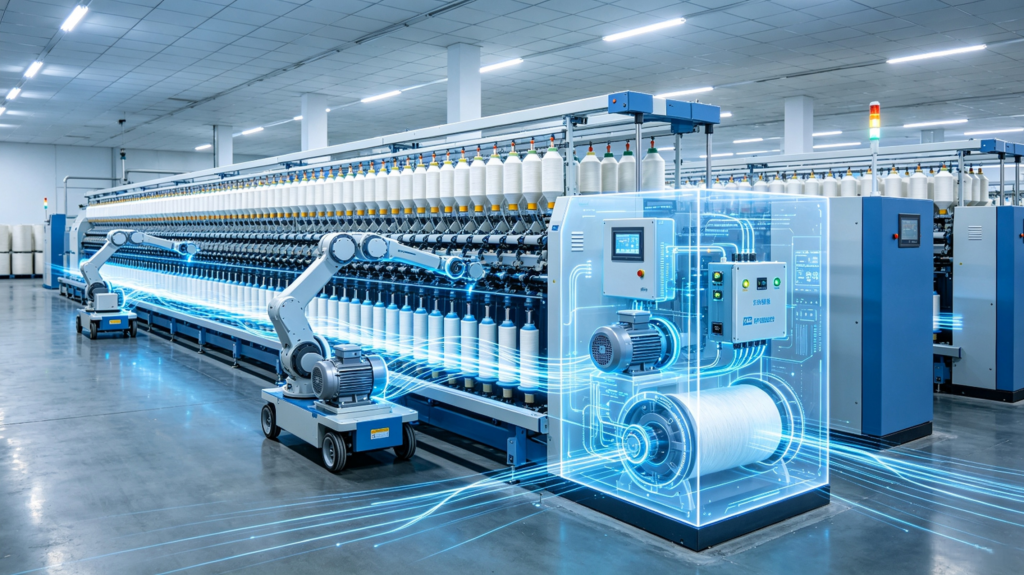
5. Assess After-Sales Support and Spare Parts Availability
Even the best spinning frame will need maintenance and spare parts. Therefore, evaluate the supplier’s service network. Do they have local technicians or partners in your region? How quickly can they deliver critical parts like spindles, travelers, or drive belts? A long downtime can ruin your production schedule. Consequently, choose a supplier with a proven track record of responsive support. Ask for references from other mills in your area. A reliable partner is as important as the machine itself.
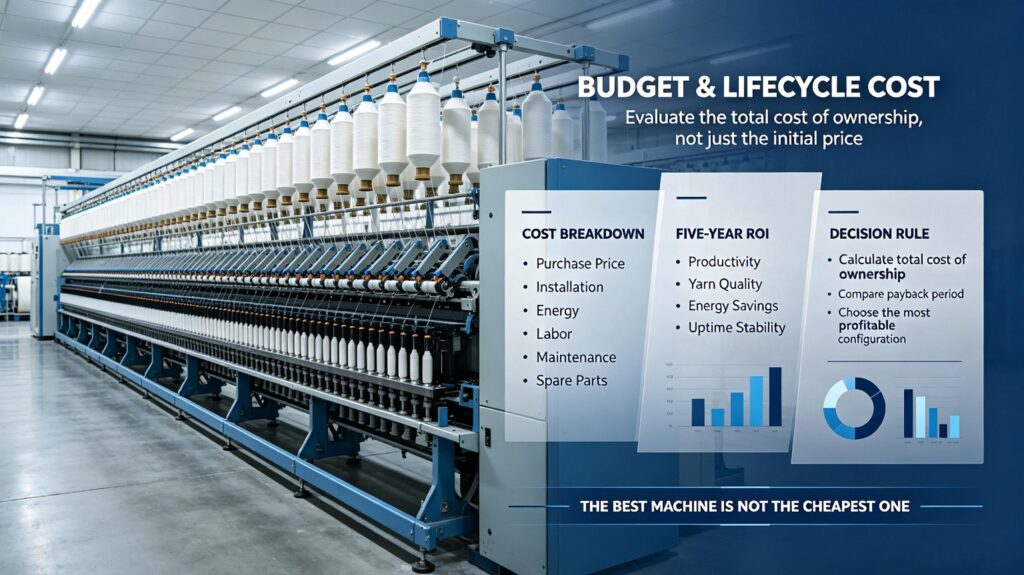
6. Consider Budget and Return on Investment
Budget is always a constraint. However, you should not choose a spinning frame based on price alone. Instead, calculate the total cost of ownership. Include the purchase price, installation, energy costs, labor, maintenance, and spare parts. Then, estimate the annual revenue from the yarn produced. A more expensive frame may deliver higher quality and lower operating costs. As a result, it could offer a better return on investment (ROI). Therefore, compare models over a five-year horizon, not just the initial price.
7. Test Machine Compatibility and Flexibility
Your new spinning frame must fit into your existing production line. First, check the compatibility with your upstream equipment (roving frames) and downstream equipment (winding machines). Second, consider the range of fiber types and blends the frame can handle. Third, look for features like quick-change gear systems or adjustable drafting settings. These features allow you to switch products faster. Consequently, your mill becomes more flexible and responsive to market demands.
Conclusion: Make a Confident Spinning Frame Purchase
Choosing the right spinning frame requires careful planning. First, define your yarn counts and required spindle count. Then, evaluate automation, energy efficiency, and after-sales support. Next, calculate the total cost of ownership and ROI. Finally, check compatibility with your existing line. By following this buyer’s checklist, you can select a spinning frame that delivers reliable performance for years. Remember, the goal is not to buy the cheapest machine, but the one that maximizes your mill’s profitability.
We manufacture advanced spinning frames for various yarn counts and production scales. Our team can help you configure the right machine for your specific needs. Contact us for a personalized consultation and equipment proposal.
Ready to choose your next spinning frame? Request a free buyer’s guide and quote.