Introduction: Why Installation and Commissioning Matter
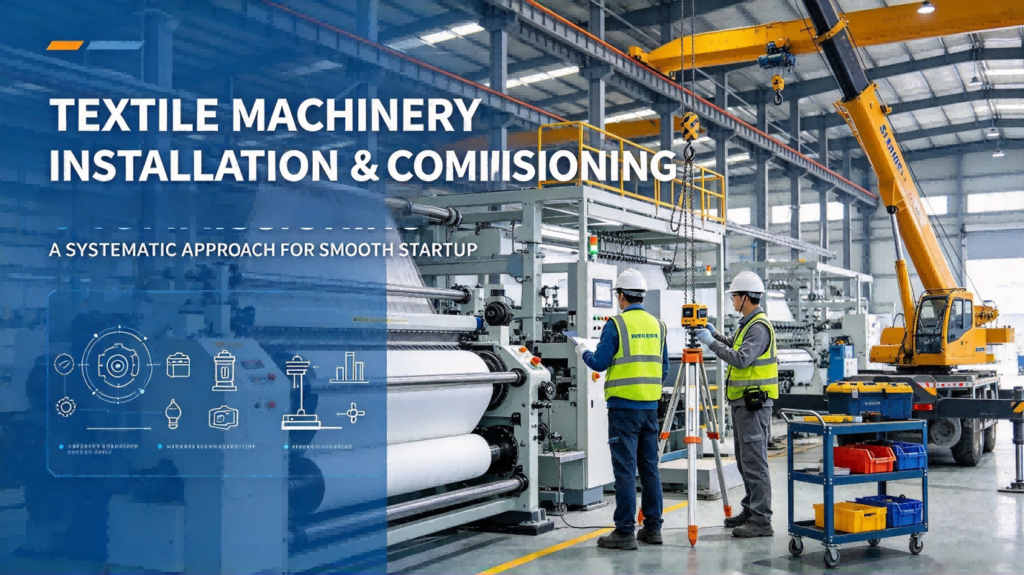
Buying new textile machinery is a major investment. However, the machine’s performance depends heavily on proper textile machinery installation and commissioning. A poorly installed machine vibrates, wears out faster, and produces inconsistent quality. Therefore, mill managers must pay close attention to every step. This guide walks you through the complete process. It also highlights common mistakes and how to avoid them.
Step 1: Prepare the Foundation and Floor for Textile Machinery Installation
The foundation is the first critical element. First, verify that the floor can support the machine’s weight and dynamic loads. Second, check the floor flatness. Most textile machinery installation manuals specify a maximum deviation of 2mm per meter. Third, prepare anchor bolt locations according to the foundation drawing. Fourth, ensure the area is clean and dry before positioning the machine. A level, solid foundation prevents vibration and misalignment later. Consequently, never rush this step.
Step 2: Position and Align the Machine Correctly
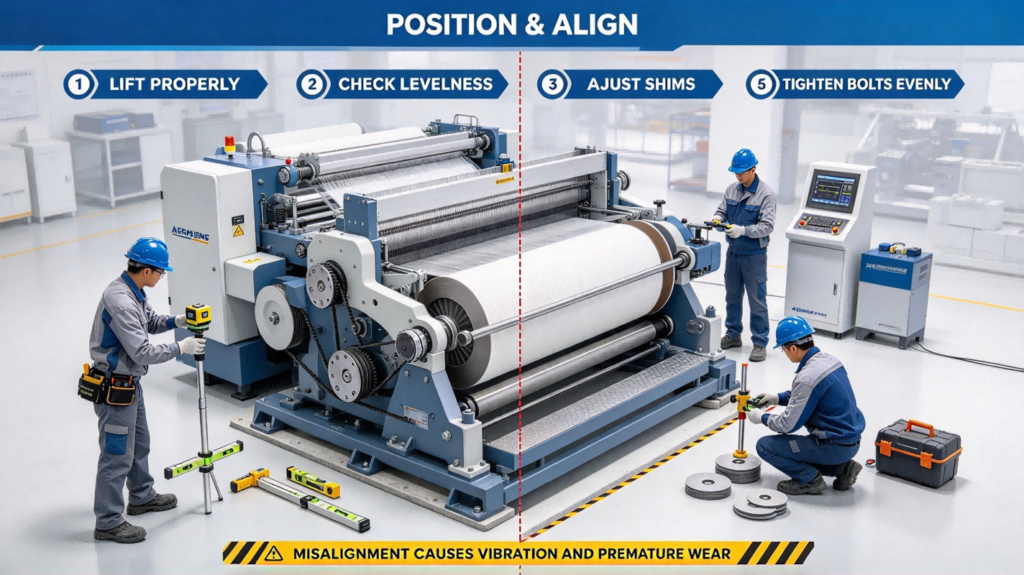
Positioning and alignment are the heart of textile machinery installation. First, move the machine into place using proper lifting equipment. Never drag or drop the machine. Second, use precision levels and laser alignment tools. Check levelness in both the longitudinal and transverse directions. Third, adjust shims under the base plates until the machine is perfectly level. Fourth, tighten anchor bolts gradually and evenly. Recheck alignment after tightening. Misalignment causes bearing wear, coupling failure, and excessive vibration. Therefore, take your time here.
Step 3: Connect Utilities and Electrical Systems
After alignment, connect the utilities. First, connect the power supply according to the electrical schematic. Verify voltage, phase sequence, and grounding. Second, connect compressed air lines. Check for leaks and correct pressure. Third, connect water and drainage if required. Fourth, connect ductwork for dust extraction or ventilation. During textile machinery installation, incorrect electrical connections are a common and dangerous mistake. Therefore, always use qualified electricians and follow local codes.
Step 4: Conduct No-Load and Load Testing During Commissioning
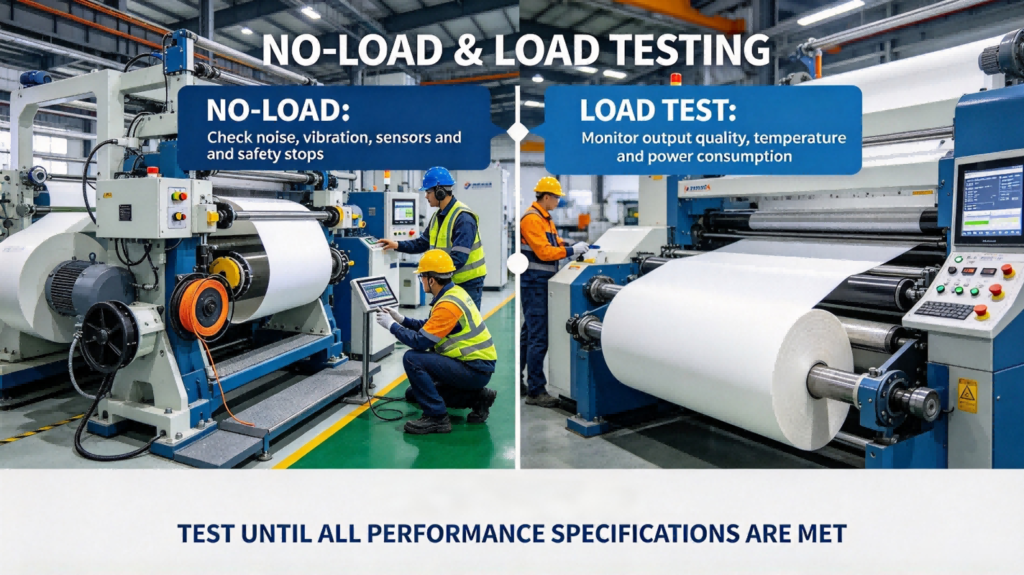
Commissioning begins with no-load testing. First, rotate the machine manually to check for obstructions. Second, start the machine without material. Listen for unusual noises and check vibration levels. Third, verify that all sensors, safety interlocks, and emergency stops function correctly. After no-load testing, proceed to load testing. Feed material gradually and monitor output quality, temperature, and power consumption. Textile machinery commissioning is complete only when the machine meets all performance specifications.
Step 5: Train Operators and Document the Process
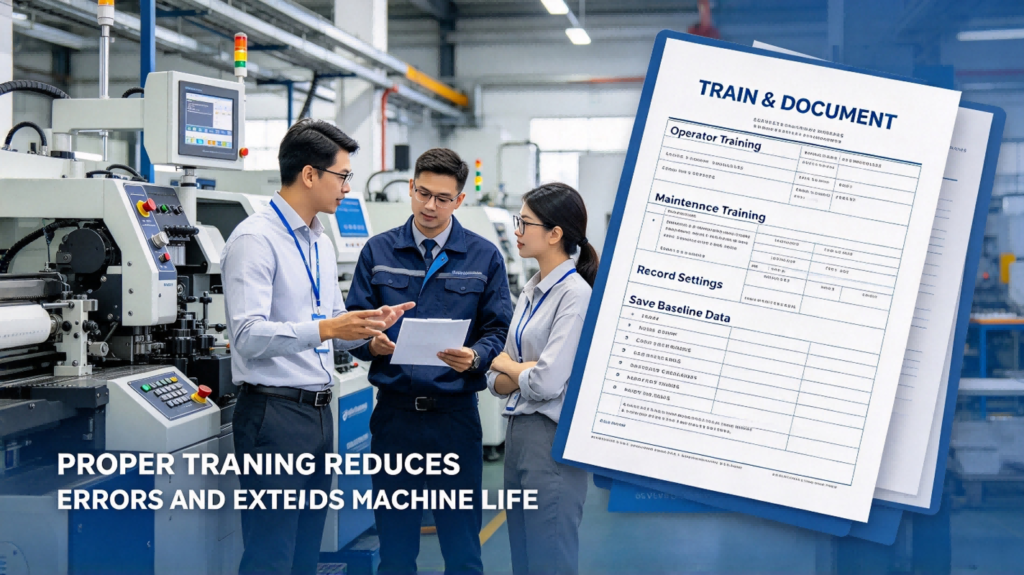
Training is often overlooked during textile machinery commissioning. However, it is essential for long-term success. First, ask the supplier to train your operators on startup, shutdown, and normal operation. Second, train maintenance staff on lubrication, inspection, and troubleshooting. Third, document all settings and parameters. Fourth, record baseline vibration and power data for future reference. Proper training reduces operator errors and extends machine life.
Common Mistakes to Avoid
Several mistakes frequently occur during textile machinery installation and commissioning. First, rushing the foundation work leads to vibration problems. Second, skipping alignment checks causes premature bearing failure. Third, incorrect electrical wiring damages motors and controls. Fourth, inadequate training leads to operational errors. Fifth, poor documentation makes future maintenance difficult. Avoid these mistakes by following a structured checklist and working closely with your equipment supplier.
Conclusion: A Smooth Start Leads to Long-Term Performance
Textile machinery installation and commissioning is a systematic process. It starts with a solid foundation and precise alignment. It continues with correct utility connections and thorough testing. It ends with proper training and documentation. Each step affects the next. Therefore, plan carefully and work with experienced suppliers. A well-installed machine delivers reliable performance for years. A poorly installed machine becomes a constant source of downtime and cost.
We provide textile machinery with detailed installation manuals and on-site commissioning support. Our team can guide your staff through every step. Contact us to ensure a smooth startup for your next project.Ready to install your new textile machinery? Ask us about our commissioning and training services