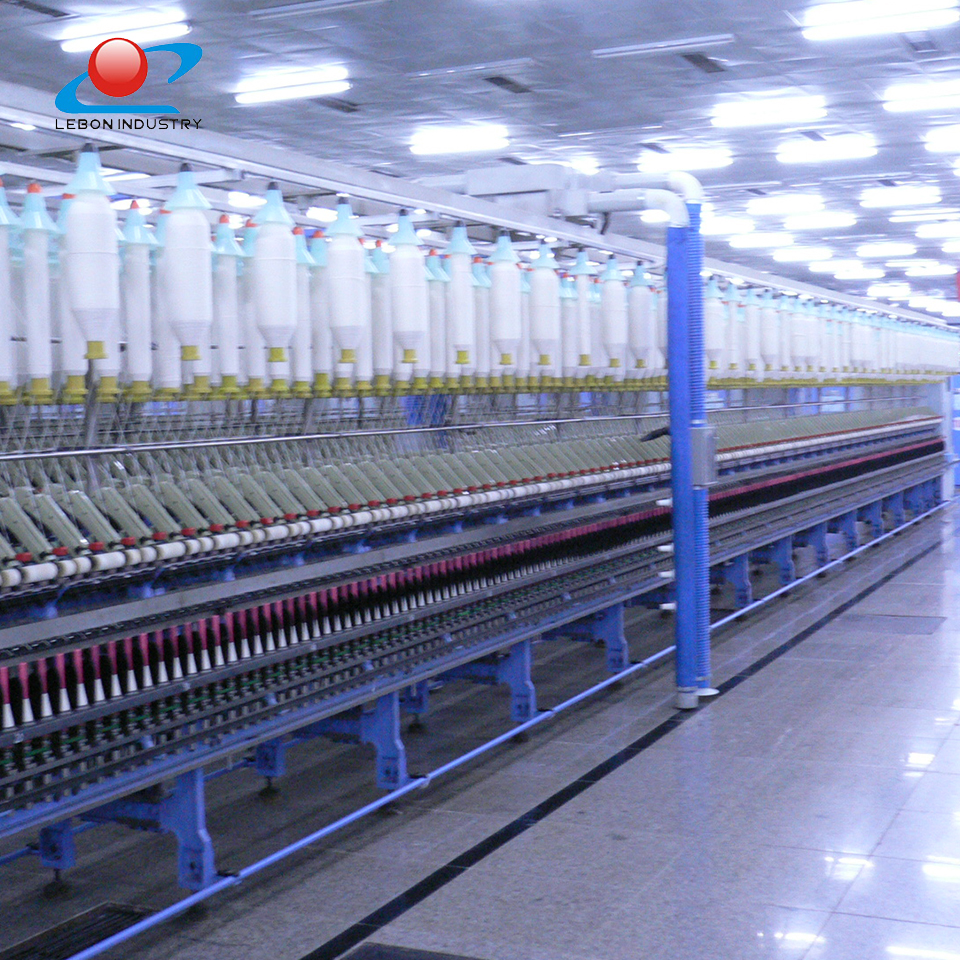
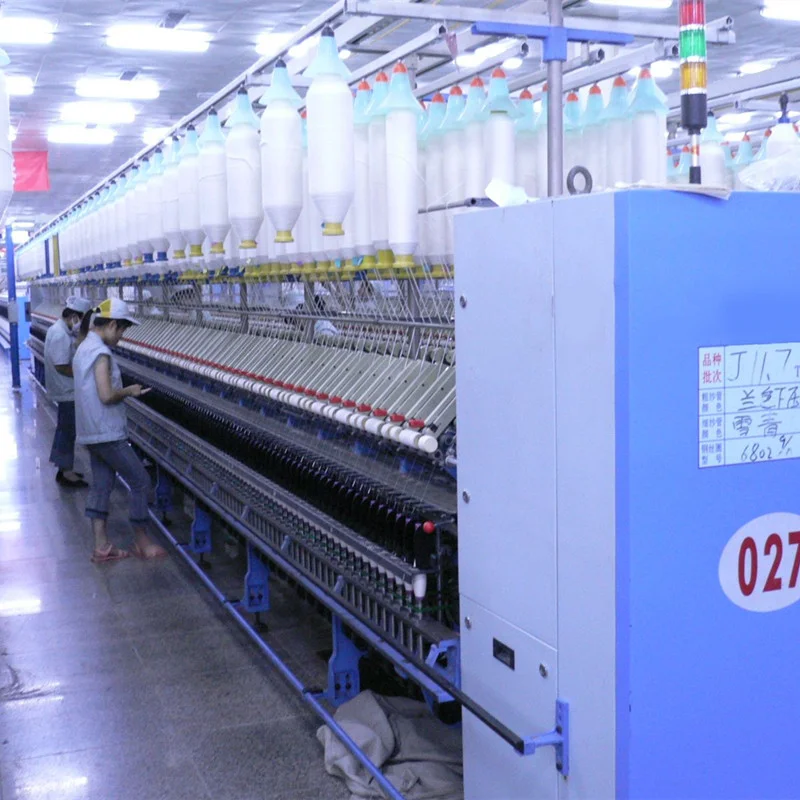
Yarn evenness is one of the primary indicators for measuring yarn quality, directly linked to downstream processing efficiency and the appearance quality of finished fabrics. In recent years, advances in textile technology and increased investment by spinning mills have significantly raised equipment standards. Key spinning components such as new-type rubber rollers and run-out-free rollers are now widely applied. As a result, yarn irregularity caused by mechanical defects—including roller and rubber roller eccentricity and gear damage—has become rare. Instead, sudden yarn irregularity (also referred to as abrupt evenness deterioration) has become a particularly prominent issue.
Sudden yarn irregularity increases rejects, lowers the batch acceptance rate, and undermines downstream efficiency. It is a major yarn defect, with the majority originating in the ring spinning process. Its characteristics include fluctuating duration, strong randomness, and a high visibility rate on the fabric surface. For these reasons, identifying the causes of sudden yarn irregularity on the fabric and implementing effective preventive measures is essential for every spinning mill.
1. Wavelength Range and Characteristics of Sudden Yarn Irregularity in Ring Spinning
According to yarn irregularity spectrogram theory, the wavelength range of irregularity generated in the ring spinning process is expressed as:
λ = πD ~ πD′E
where D and D′ are the diameters of the front and back rollers, and E is the total draft ratio of ring spinning. For cotton ring spinning machines, taking D = D′ = 25 mm and E = 35 (typically 20–45), the wavelength range of ring spinning irregularity is approximately 7.8 cm to 274.7 cm.
When sudden irregularity defects first appear on fabric, the cause is often undetermined. The conventional approach is to dissect the fabric, rewind the yarn, and test it on an evenness tester. Based on the resulting spectrogram, engineers then deduce the responsible process and probable cause before conducting targeted inspection and repair. Through years of accumulated experience, it has been established that sudden fabric irregularity originates predominantly in the ring spinning process—approximately 83% in ring spinning, 11% in preparatory spinning, and 6% in other processes. Its defining traits are strong abruptness and clear visibility on the fabric surface; because of its random nature, the duration varies, and sometimes the defect disappears on its own after a period even if the root cause is never found.
In the long-term tracing of sudden yarn irregularity through fabric dissection and corresponding verification tests, two typical spectrograms and irregularity curves have been documented:
Mechanical wave: Characterized by chimney-like peaks in the 1.95 cm–9.0 cm region, with most exhibiting obvious harmonics near 2.5 cm (λ/3) and 4 cm (λ/2).
Draft wave: Its spectrogram peaks are significantly higher than the normal peak curve.
Compared with normal yarn, the evenness CV (coefficient of variation) value of sudden-irregularity yarn deteriorates markedly, and the frequency of common yarn faults rises sharply as a consequence.
2. Causes of Sudden Yarn Irregularity
2.1 Causes of Mechanical Waves
2.1.1 Mechanical defects of the front roller and front rubber roller, including roller or rubber roller eccentricity, oil-starved bearings, wear, and knife damage to the rubber roller. As textile enterprises strengthen management and the quality of both maintenance and spinning components improves, such problems have become uncommon.
2.1.2 Fiber debris and neps embedded on the front roller or rubber roller. Sugars present in raw cotton, incompletely cleaned impurities, and other residues are fully exposed after drafting in ring spinning. Combined with temperature and humidity effects (especially in summer), these readily adhere to and embed in the roller groove (occasionally on the rubber roller), causing the roller or rubber roller to assume an effectively eccentric or elliptical shape and produce irregularity. In the spectrogram, the harmonics are pronounced. Some embedded debris detaches and clears after a period of running—this explains why sudden irregularity defects sometimes vanish on their own. In addition, accumulated dust and oily fiber flocs blown down from old-type air-conditioning ducts are another source of roller-embedded debris.
2.1.3 Spinning on one end while the other end of the front rubber roller is wound with fiber. Because of the fiber winding on the front rubber roller, the axial pressure on the opposite, actively spinning end becomes uneven, producing mechanical yarn irregularity.
2.2 Causes of Draft Waves
Theoretically, both the front and back drafting zones of ring spinning can produce draft-wave irregularity yarn. In practice, however, draft-wave irregularity originating in the back drafting zone is rarely observed. The discussion here therefore focuses on the causes of irregularity generated in the front drafting zone.
2.2.1 Draft gear defects. Yarn irregularity arising from poor maintenance, or from wear and poor meshing of the light and heavy gears during operation.
2.2.2 Top and bottom cradle pin failure. This includes breakage or deformation of the top cradle pin spring leaf, the bottom cradle pin not being seated properly, a missing spacer on the top cradle pin, paper clamped in the spacer, (roving) identification paper or dead cotton trapped between the top and bottom aprons, a defective bottom apron, failure of apron grip, and roving twisting in the back zone.
3. Prevention Measures for Sudden Yarn Irregularity
3.1 Strengthen Equipment Maintenance and Basic Management
The preceding analysis shows that mechanical causes—rubber roller and roller eccentricity, oil starvation, gear wear—account for a relatively small proportion. This is predicated on a high level of equipment maintenance quality. Therefore, improving the maintenance quality of equipment (rollers, gears) and rubber roller production, and carrying out rigorous quality inspection at every stage of maintenance, are critical.
Mills should select high-quality rollers, rubber rollers, and bearings suited to their actual conditions, master the wear patterns of key components and accessories, and resolve issues before sudden irregularity emerges. For example, wiping the rollers with alcohol during each maintenance and cleaning cycle can effectively reduce irregularity caused by embedded debris; this cycle should be further shortened in summer. All equipment maintenance and quality inspections should be incorporated into routine working systems to ensure a solid equipment foundation, keeping sudden irregularity from mechanical defects to a minimum.
3.2 Dedicated Personnel for Specialized Inspection and Repair
Assign dedicated personnel to conduct specialized inspection and repair of issues that can arise at any time—roller or rubber roller embedded debris, cradle pin failure, and roller or rubber roller damage. This is performed through tactile checks on rollers and rubber rollers and visual checks for front and back zone anomalies, stopping and repairing whenever a problem is found. These staff should simultaneously handle the feedback and fault-tracing of sudden-irregularity defective fabric. When a problem is identified, the root cause should be traced and the issue contained at its earliest stage, ensuring irregularity defects are effectively controlled.
3.3 Build a Collective Prevention Awareness
Strengthen quality-awareness training for operators, doffers, and maintenance technicians, and cultivate an all-staff inspection mindset. Issues that can occur at any moment—paper or dead cotton trapped in the top and bottom aprons, missing or damaged spacers, top and bottom cradle pin failure—can only be minimized when they are detected and resolved the instant they appear, thereby reducing the sudden-irregularity defects they cause.
3.4 Short-Cycle Comprehensive Inspection
Where conditions permit, adopt a short-cycle (no more than 3 days) comprehensive full-coverage inspection to promptly identify and repair lagging spindles, thereby reducing and eliminating sudden yarn irregularity. Through years of effort, effective control measures have been developed and embedded into daily work as fixed procedures. As a result, the sudden-irregularity defect rate has been reduced from the original 2.5% down to 0.13%–0.4% in recent years, and this improved level has been stably maintained.
Consistent equipment maintenance, dedicated inspection personnel, and a mill-wide quality mindset are the most effective defenses against sudden yarn irregularity in ring spinning.
Key Takeaways
Sudden yarn irregularity is now the dominant evenness defect in modern ring spinning, as mechanical causes have been largely eliminated by better equipment.
Defects originate 83% in ring spinning, 11% in preparatory spinning, and 6% in other processes.
Mechanical waves produce chimney-like spectrogram peaks; draft waves produce elevated broad peaks — both worsen CV and increase common yarn faults.
The most frequent triggers are embedded debris on rollers, draft gear wear, and cradle pin / apron failures.
A combination of preventive maintenance, dedicated inspection staff, all-staff awareness, and short-cycle full inspection reduced defect rates from 2.5% to 0.13–0.4%.
4. Conclusion
4.1 With improvements in equipment and component quality and in maintenance standards, the causes of sudden yarn irregularity in ring spinning have shifted considerably. Random issues arising during normal production have become the dominant cause. Consequently, identifying patterns and adopting effective preventive measures is the key to reducing sudden yarn irregularity.
4.2 Effective measures for controlling sudden yarn irregularity should be incorporated into daily work and formalized into institutional systems, so that problems are prevented before they ever occur.