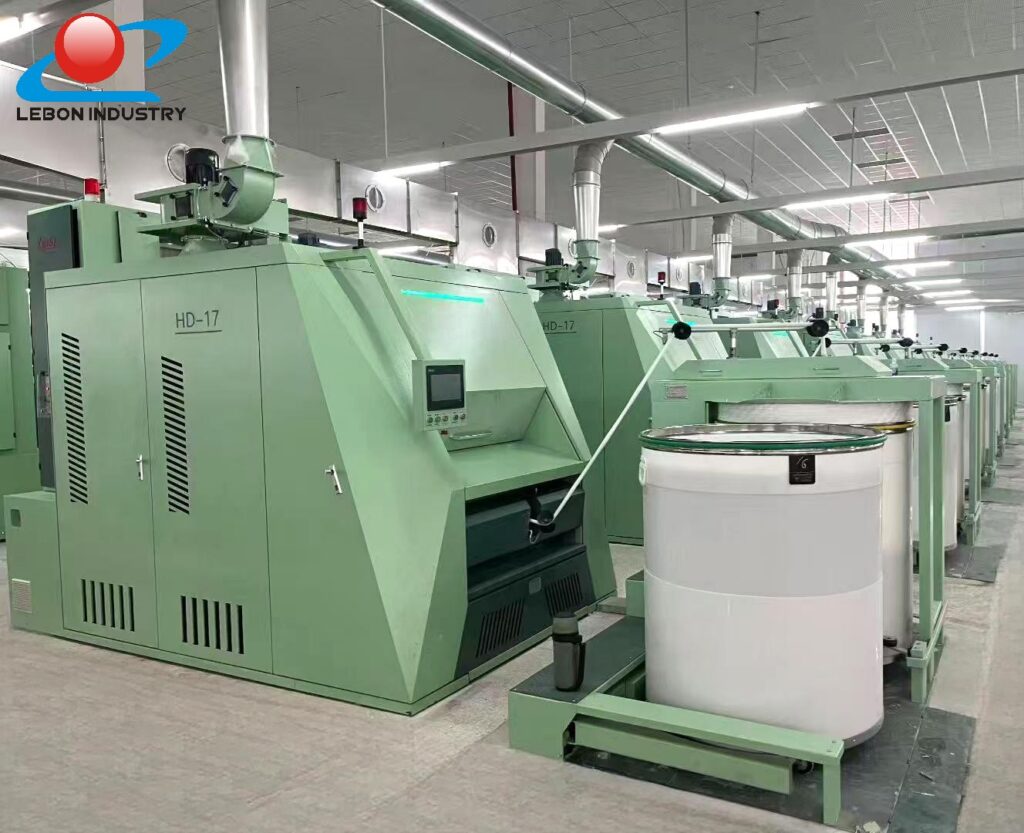
To fully exert the carding performance of carding wire cloth, extend its service life and stabilize textile product quality, this paper systematically elaborates on the failure judgment methods, root causes and replacement criteria of carding wire cloth. It also puts forward that electronic intelligent failure judgment has become an industry expectation for textile enterprises. In actual production, real-time monitoring of the operating status of carding machines and supporting carding wire cloth is essential. Comprehensive data collection and dynamic management based on five key factors—man, machine, material, environment and method—enable accurate failure identification and timely replacement of carding wire cloth, which is crucial to stabilizing product quality and enhancing customer satisfaction.
1. Failure Judgment and Causes of Carding Wire Cloth
1.1 Carding Wire Cloth Failure Judgment Methods
Carding wire cloth is a core consumable component installed on multiple key parts of carding machines, including pre-carding racks, taker-in rollers, fixed flats, main cylinders, doffers and revolving flats. As the key functional medium for fiber carding, splitting and impurity removal, the sharpness and surface state of carding wire cloth directly determine the evenness, impurity content and internal quality of final carded sliver, and further affect the finished yarn strength and yarn defect indicators. In modern cotton spinning production, the failure evaluation of carding wire cloth mainly focuses on two core physical indicators: tooth tip sharpness and surface roughness, which are the most intuitive bases for on-site production judgment.
For a long time, textile workshops have adopted a practical manual sensory evaluation method to grade carding wire cloth sharpness by hand touch, which is simple, efficient and suitable for daily on-site inspection. The grading standard is divided into five levels according to tactile feedback. The first-class carding wire cloth features fully sharp tooth tips with obvious sticking and stinging sensation, achieving the optimal carding state; the upper-middle grade has intact sharp teeth with mild and uniform stinging feeling, meeting high-standard production requirements; the middle grade maintains basic tooth sharpness with slight stinging sensation, suitable for conventional fiber processing; the lower-middle grade presents significantly weakened sharpness with distinguishable positive and negative directional friction difference, showing preliminary aging signs; the lowest grade is completely smooth and dull without any directional tactile difference, with severe tooth wear and failure to meet production needs.
The sharpness evaluation covers the full width of cylinder, doffer, flat and taker-in carding wire cloth. According to authoritative industry standards, cylinder carding wire cloth with linear damage width no more than 0.3 cm and doffer carding wire cloth with linear damage width no more than 0.2 cm are still deemed qualified. Sensory judgment is the most intuitive and efficient on-site method to quickly assess the working state of carding wire cloth.
In actual on-site production, there is a common phenomenon that some carding wire cloth is rated as lower-middle grade in sensory sharpness and roughness detection, but can still maintain stable carded sliver quality and production indicators. The core reason is that the overall tooth tip cylindricity of the whole machine is excellent, and the equipment calibration precision is high, ensuring standard and consistent gauge values at the left, middle and right positions of the carding machine, which fully complies with technological process standards. On the contrary, many workshops blindly replace carding wire cloth merely based on sensory aging judgment, resulting in unexpected deterioration of product quality indicators. Frequent unreasonable replacement not only increases equipment maintenance workload and spare part cost, but also causes waste of human and material resources, dampens the work enthusiasm of maintenance personnel, and affects daily equipment management efficiency. It is fully proven that the traditional single manual sensory evaluation method can no longer adapt to the refined and high-precision management requirements of modern textile production for carding wire cloth operating status.
1.2 Root Causes of Carding Wire Cloth Failure
Low manufacturing precision of supporting mechanical accessories is the fundamental cause of premature failure and shortened service life of carding wire cloth. With the continuous upgrading of textile equipment manufacturing technology and the wide application of new lightweight and high-strength materials, aluminum alloy revolving flat frameworks, fixed flat bases and integrated roller cylinders have gradually replaced traditional cast iron parts and become mainstream supporting accessories for high-speed carding machines. However, many accessory manufacturers still have deficiencies in processing technology and precision control, resulting in inherent defects in matching parts. Reasonable material selection and strict improvement of component manufacturing precision can effectively reduce abnormal wear and early failure of carding wire cloth. Meanwhile, building a professional technical talent team and optimizing equipment maintenance management can balance production quality and comprehensive operating costs to achieve optimal production benefits.
1.2.1 Low Manufacturing Precision of Flat Frameworks
Flat frameworks are mainly made of cast iron and aluminum alloy with qualified raw material quality. Nevertheless, differences in wrapping processes and equipment operating status often result in poor flatness of the framework base, with the left-right deviation reaching up to 0.51 mm in extreme cases. Even well-known manufacturers that promise a standard deviation of 0.08 mm cannot fully guarantee the flatness of wrapped carding wire cloth and the accuracy of on-machine technological requirements.
1.2.2 Insufficient Tensile Strength of Flat Chains
Mainstream flat chains on the market include steel and aluminum alloy products. Production requires flat chains to feature long service life and high tensile strength to avoid deformation, fracture and wear. These defects will cause tooth collision between flat carding wire cloth and cylinder carding wire cloth, reduce yarn quality and increase production and maintenance costs.
1.2.3 Low Cylinder Cylindricity and Flat Base Flatness
The cylindricity of cylinder, doffer and taker-in rollers determines the cylindricity of wrapped carding wire cloth. The standard required cylindricity of bare cylinders and flat base flatness is 0.02 mm, and the qualified value after carding wire cloth wrapping is 0.03 mm. Failure of manufacturers to meet this precision standard will lead to unqualified carding wire cloth installation and accelerated failure during operation.
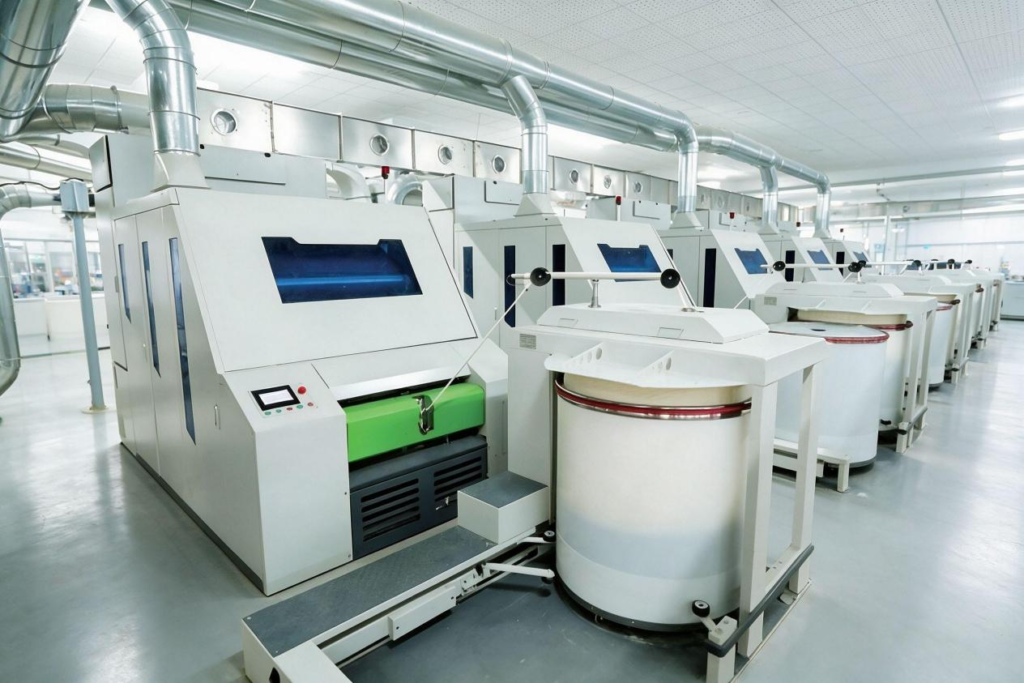
1.3 Electronic Judgment Technology for Carding Wire Cloth Failure
In conventional textile workshop management, restricted by production efficiency and staffing arrangement, maintenance personnel cannot stop each carding machine for comprehensive inspection and detection of carding wire cloth every day. The traditional inspection mode is passive, and detection and maintenance are only carried out when product quality indicators fluctuate abnormally. This lagging management method leads to a large number of substandard carded slivers flowing into the subsequent spinning process, resulting in batch quality risks and unnecessary production loss. With the rapid development of industrial information technology and intelligent manufacturing, online real-time detection technology has become the most advanced and effective means to solve this industry pain point.
The online detection system installs professional sensing and monitoring equipment on the carding machine production line, realizing real-time collection, analysis and feedback of equipment operation and product quality data, so as to guide standardized production and reduce resource waste. Nevertheless, the current domestic online monitoring technology still has certain limitations in high-precision real-time capture of subtle quality variables of carding wire cloth. At the same time, traditional manual sampling analysis has serious time lag, which cannot meet the needs of real-time dynamic management. In addition, affected by different technical proficiency, operational experience and subjective hand feel of workers, manual gauge adjustment often has errors. Excessively tight gauge will cause tooth collision between matching carding wire cloth and damage tooth tips, while excessively loose gauge will reduce carding efficiency and cause abnormal wear of carding wire cloth. Therefore, realizing electronic intelligent gauge adjustment and accurate electronic failure judgment of carding wire cloth has become an urgent development demand and core expectation of modern textile enterprises, which can maximize equipment operation performance, reduce labor dependence and effectively control production costs.
2. Scientific Replacement Standards for Carding Wire Cloth
In actual production management, the replacement of carding wire cloth cannot rely on single judgment standards. It is unscientific to replace carding wire cloth simply when its sensory sharpness and surface roughness drop to the lower-middle grade or when it reaches the fixed service cycle of 500 tons or 800 tons of output. Scientific replacement management requires comprehensive consideration and dynamic overall planning. Combined with long-term production test data and standardized working methods, enterprises should conduct systematic analysis from the five core dimensions of man, machine, material, environment and method, so as to realize accurate judgment and reasonable replacement of carding wire cloth.
2.1 Sensory Detection and Dynamic File Management
Enterprises shall establish complete equipment operation ledgers to file the operating status of each carding machine and grade carding wire cloth status in real time, enabling managers and maintenance personnel to fully grasp equipment conditions. Standardized operation management and professional staff training play a decisive role in carding wire cloth maintenance. Improving workers’ operational skills can effectively reduce abnormal wear and prolong the service cycle of carding wire cloth.
2.2 Accurate Judgment of Equipment Operating Status
The stable operation of carding machines depends on the coordinated work of self-leveling systems, transmission systems and technological parameters. Abnormal conditions such as inconsistent left-middle-right gauge and faulty self-leveling will interfere with staff’s judgment of carding wire cloth status, leading to misjudgment of failure and unnecessary replacement.
2.3 Stability of Raw Material Quality
Stable raw material quality is conducive to extending carding wire cloth service life. Frequent changes in raw material indicators such as impurity content and short fiber rate will force carding wire cloth to adapt to variable processing conditions, causing continuous friction damage and accelerated aging of card teeth.
2.4 Stable Workshop Environment and Data Analysis
Workshop temperature, humidity and dust filtration conditions directly affect carding wire cloth operating status. Excessive humidity causes carding wire cloth rust and corrosion, while overly dry air leads to excessive short fibers and flying flowers, blocking air suction devices and causing abnormal equipment operation and carding wire cloth damage. Production test data intuitively reflects the operating status of carding machines and carding wire cloth. The final replacement decision should be based on whether the actual product indicators meet customer quality requirements.
3. Conclusion
To fully exert the efficient carding performance of carding wire cloth, delay aging and wear, and maximize its service life, textile enterprises must establish a full-cycle dynamic management mechanism for carding machines and supporting carding wire cloth in daily production. By collecting and sorting operational data from the five dimensions of personnel operation, equipment status, raw material quality, workshop environment and technological methods, enterprises can implement refined dynamic management. Accurate failure judgment and timely standardized replacement of carding wire cloth can avoid quality fluctuation caused by aging equipment and waste of resources caused by blind replacement. This scientific management mode can effectively stabilize textile product quality, control comprehensive production and maintenance costs, and continuously improve product competitiveness and end-customer satisfaction in the market.