
Introduction: Why Great Machines Can Still Produce Bad Fabric
You bought high-quality individual machines. Each one works perfectly alone. Then you connect them into a complete nonwoven production line, but the final fabric has uneven thickness, weak spots, or edge wrinkles. This frustration is common. The problem rarely lies in a single machine. Instead, it lives in the gaps between them. Proper nonwoven line integration ensures smooth material flow from the carding machine to the winder. This article identifies three critical integration mistakes that ruin nonwoven fabric quality. More importantly, it shows you exactly how to fix them.
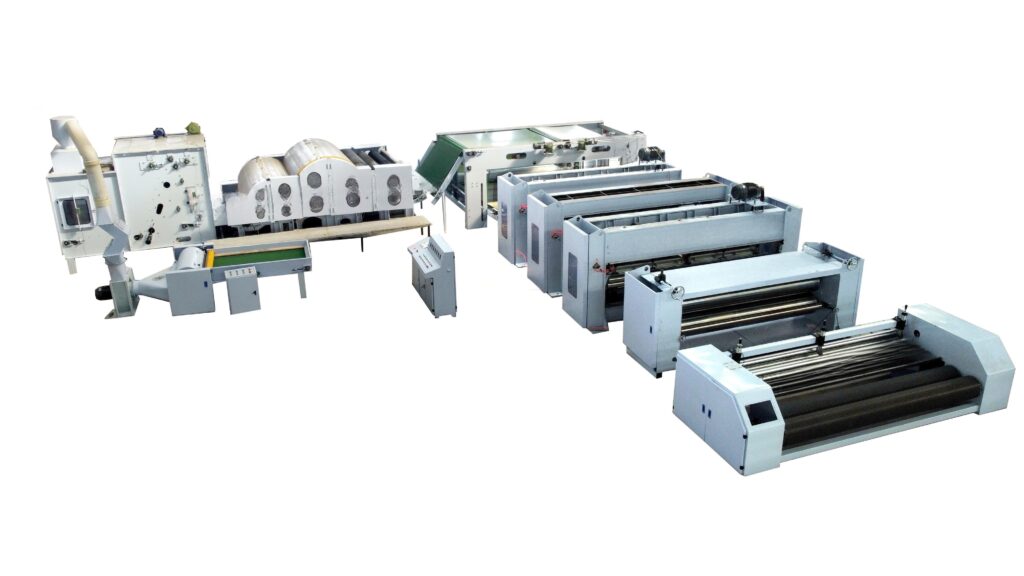
Mistake 1: Speed Mismatch Between Carding Machine and Cross Lapper
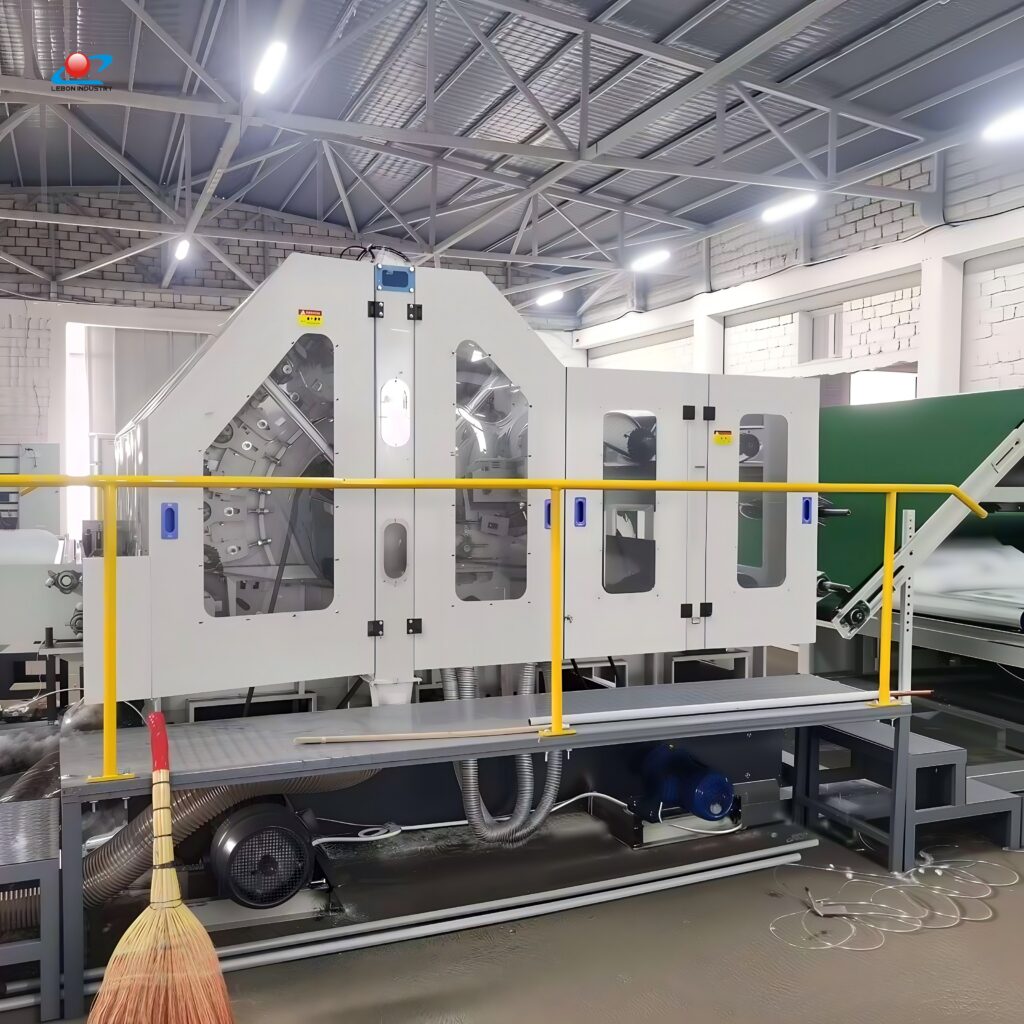
Your carding machine produces a delicate web at a certain linear speed. This web then transfers to the cross lapper, which builds layers at its own pace. When these speeds do not match perfectly, the web stretches, compresses, or tears. Consequently, the final fabric has uneven weight distribution and weak zones.
How to Identify the Problem:
Look for signs of web tension before the cross lapper. Is the web sagging between machines? Sagging indicates the cross lapper pulls too slowly. Alternatively, is the web stretching or narrowing before entering? Stretching means the cross lapper pulls too fast. Additionally, inspect the cross lapper apron for uneven fiber accumulation at the edges.
How to Fix It:
First, synchronize the carding machine output speed with the cross lapper infeed speed using electronic shaft control. Modern drives store speed profiles for different products. Second, install a dancer roller or loop control system. This device maintains constant, low tension regardless of minor speed variations. Finally, verify that the web guide and conveyor belts across the transfer zone are clean and tracking straight.
Prevention Tip:
When purchasing equipment, choose machines with integrated drive communication. A single controller managing both the cross lapper and carding machine eliminates speed mismatch permanently.
Mistake 2: Poor Web Uniformity from Cross Lapper Causing Thickness Variation
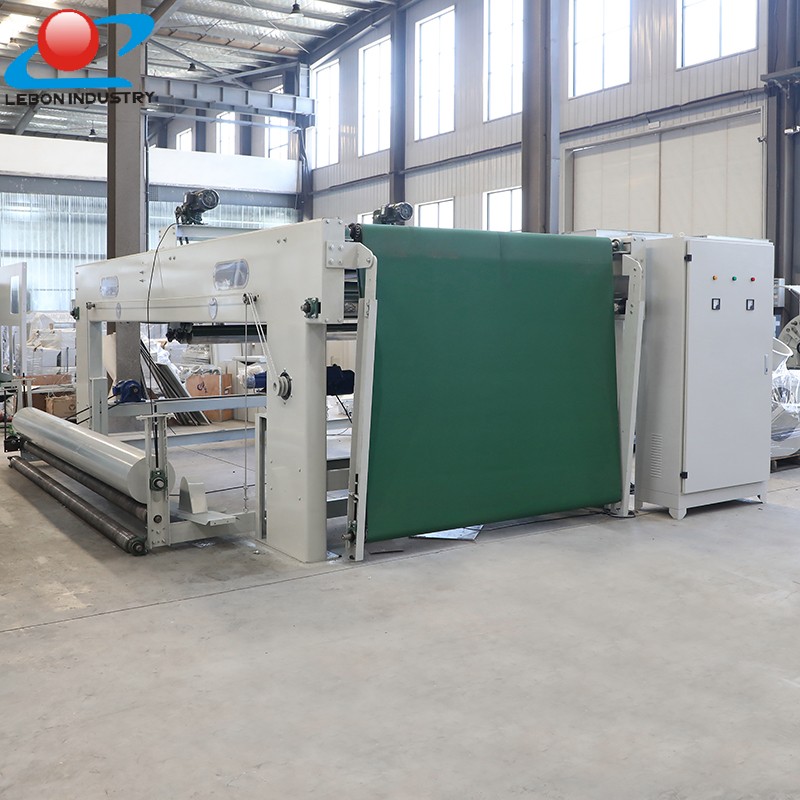
The cross lapper builds the multi-layer batt that enters the needle loom. Its job is simple: fold the carded web back and forth evenly. However, improper lapping settings create uneven layering. As a result, some areas have too many layers, others too few. This variation directly transfers to the final needle punched nonwoven, causing thickness variation and weak streaks.
How to Identify the Problem:
Run the cross lapper without the needle loom engaged. Stop the conveyor and visually inspect the batt. Look for thick bands or thin lines across the width. Also, measure the batt weight at multiple points using a portable scale. A coefficient of variation (CV%) above 3% signals an integration problem.
How to Fix It:
First, calibrate the cross lapper carriage speed against the incoming card web speed. The carriage must reverse exactly at the fabric edges without overlapping or leaving gaps. Second, check the lapper apron tension. Uneven tension causes the web to stretch or bunch. Third, install a cross lapper with independent drive control for each apron. This feature allows precise tuning of the layering process.
Prevention Tip:
Invest in a cross lapper with an automatic web guidance system. Sensors detect the web position and adjust the carriage dynamically, ensuring perfect edge-to-edge coverage.
Mistake 3: Winding Tension Inconsistency Affecting Roll Quality
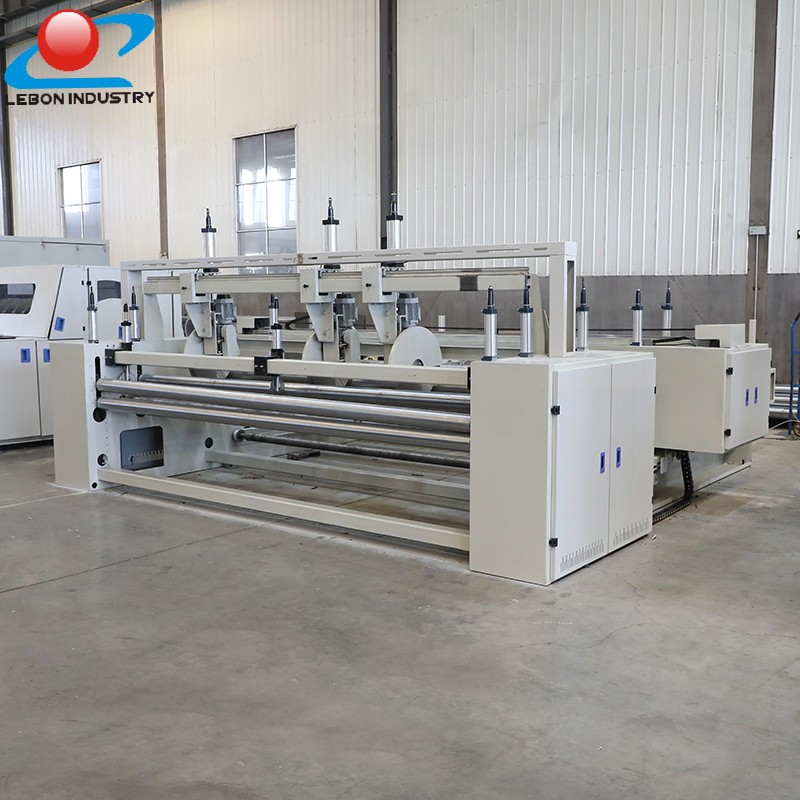
After bonding, the finished fabric winds onto rolls. The winder must maintain constant tension from the core to the full roll. However, tension spikes or drops create hard spots, telescoping edges, or crushed cores. Poor roll quality frustrates your customers and causes processing issues during their converting operations.
How to Identify the Problem:
Examine finished rolls. Do they have “starring” (creases radiating from the core)? Are the edges wavy or protruding? Does the roll feel soft in some spots and rock-hard in others? These are tension-related defects. Additionally, listen for snapping sounds during winding, which indicate sudden tension changes.
How to Fix It:
First, install a load cell tension control system on the winder. This system measures real-time tension and adjusts the drive motor speed automatically. Second, ensure the dancer roller moves freely and its pneumatic pressure matches the fabric strength. Third, program a tapered tension profile: higher tension at the core, gradually decreasing toward the full diameter. This technique prevents core crush and roll telescoping.
Prevention Tip:
Select a winder with center-surface winding capability. This design applies torque to both the core and the roll surface, maintaining consistent tension even with delicate nonwoven fabrics.
Bonus: The Hidden Cost of Poor Integration
These integration mistakes share one consequence: increased waste. Speed mismatches tear webs. Uneven lapping creates off-spec fabric. Poor winding ruins rolls. Each rejected meter represents lost raw materials, energy, and labor. Worse, inconsistent quality damages your reputation. Therefore, fixing integration issues delivers immediate financial returns.
Conclusion: Integration Expertise Matters as Much as Machine Quality
Buying excellent individual machines is only half the solution. The true art of nonwoven manufacturing lies in how these machines work together. Speed matching between carding machine and cross lapper, uniform lapping, and controlled winding tension form the foundation of consistent product quality. Address these three integration mistakes, and your nonwoven production line will deliver reliable, high-quality fabric roll after roll.
We understand integration challenges deeply. Our nonwoven machinery comes pre-configured with communication protocols and drive synchronization. From installation to fine-tuning, we help you achieve seamless line performance.
Ready to fix your line integration issues? Contact us for a comprehensive line audit and customized integration solution.