
Energy conservation and cost reduction are paramount concerns for every spinning mill. Among the various energy-consuming processes in a textile mill, the blow room and carding operations stand out as major consumers of power. In this guide, we explore a practical approach to energy saving in the blow room: optimizing the rotary filter system. We also break down the potential cost savings in US dollars, so you can estimate the impact on your own electricity bill.
Why Energy Efficiency Matters in Spinning Mills
Rising energy tariffs and intensifying market competition have made textile mill energy efficiency a strategic priority. The blow room is the first and one of the most power-intensive stages of yarn preparation, which means even small improvements here can deliver significant, recurring savings. For mills running multiple shifts — often 22 hours a day — reducing unnecessary power draw directly improves profitability and strengthens the business case for sustainable manufacturing.
Understanding the Blow Room Rotary Filter System
A rotary filter system is an essential component of the blow room. Its primary function is to extract dropping wastes and dusty air from the multimixer, as well as air from condensers and Dustex fans. While these fans perform various tasks, not all of them require radial fan suction; some only need to expel air that has already passed through filter media. This distinction is the key to unlocking real energy savings.
The Hidden Cost of Unnecessary Suction
When clean air is still routed through the rotary filter with full suction, the system consumes power it simply does not need. A typical rotary filter setup consumes approximately 20 kW of power. Reducing the filter load — rather than adding more fans or more filtration — is where the biggest opportunity lies.
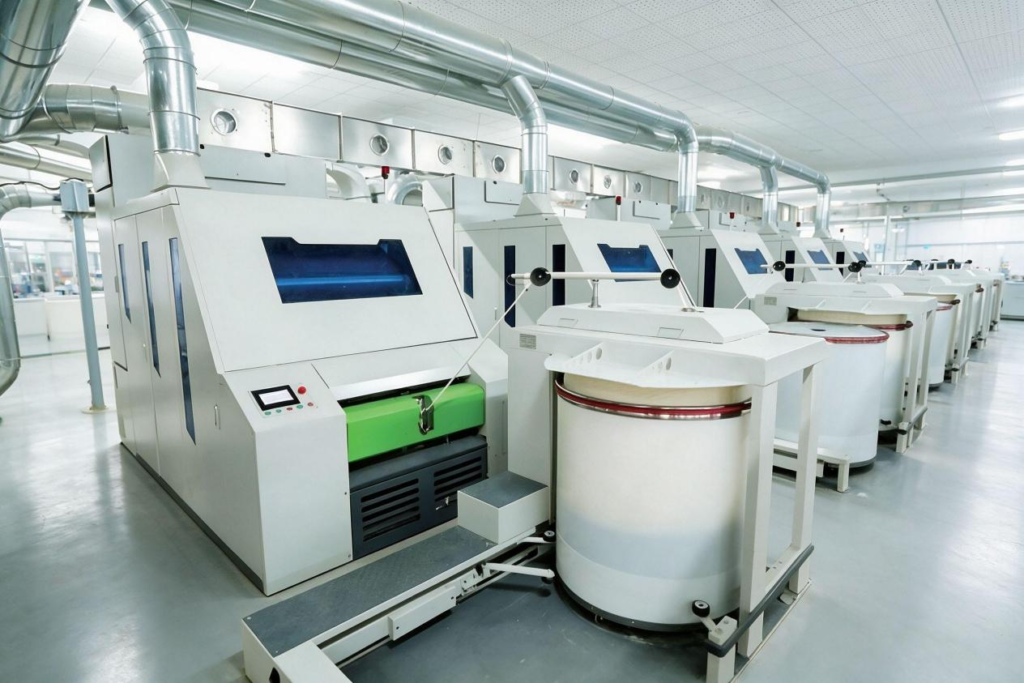
Blow Room Energy Saving Solution: 5 Steps to Reduce Rotary Filter Load
Here is how the energy-saving solution works in practice:
1. Route All Exhaust Air to a Dedicated Room
Create a separate room where all exhaust air pipes from the Dustex, condensers, and other air-throwing components are directed. These pipes expel their air into dust bags designed for collecting short fibers.
2. Collect Short Fibers and Dust in Dedicated Dust Bags
The dust bags efficiently collect short fibers and dust, preventing them from clogging the filter media and keeping blow room air clean.
3. Discharge Cleaned Air Through Nylon Mesh
After the short fibers and dust are collected, the cleaned air passes through a nylon mesh, ensuring that only purified air is released.
4. Enable Natural Air Discharge and Switch Off Suction Fans
Since the exhaust air is now expelled by its own pressure, there is no need for additional suction fans. The pre-filter and dust collector motors can be stopped entirely, further conserving energy and reducing operating costs.
5. Install a Final Dust Separation System
The cleaned air is passed under a dust separation system installed at the end of the exhaust duct, which removes micro dust and other particulate matter before the air is released.
Frequently Asked Questions
How much power does a blow room rotary filter system consume?
A typical blow room rotary filter system consumes around 20 kW of power. By optimizing the filter load and eliminating unnecessary suction, spinning mills can significantly reduce this consumption and lower their electricity bills.
What is a rotary filter used for in a blow room?
The rotary filter extracts dropping wastes, dusty air from the multimixer, and air from condensers and Dustex fans. It keeps the spinning process clean by separating short fibers and dust from process air.
How can spinning mills reduce energy consumption?
Key measures include optimizing the blow room rotary filter load, eliminating unnecessary suction fans, routing exhaust air through dust bags and nylon mesh, and switching off pre-filter and dust collector motors where possible. Combined, these steps produce meaningful, recurring energy savings.
Conclusion: A Practical Step Toward Sustainable Spinning
Energy saving is crucial for the sustainability and profitability of spinning mills. By optimizing the blow room’s rotary filter system and implementing the changes described above, mills can achieve substantial energy savings, lower operating costs, and more efficient waste management. Moreover, this eco-friendly approach promotes responsible resource utilization and a cleaner environment.
Investing in energy-saving measures not only benefits the mill’s financial bottom line but also demonstrates a commitment to sustainable textile manufacturing. As the textile industry moves toward greater sustainability, energy-efficient blow room operation is a vital step for spinning mills to thrive in a competitive market while reducing their environmental impact.
Note: The energy-saving figures in this article are based on the data provided and may vary depending on individual mill operations and energy tariffs.
