
Introduction: Why High-Temperature Filtration Matters
In industrial environments where extreme heat, corrosive gases, and fine particulate matter coexist, high-temperature filtration is not merely a regulatory requirement—it is a critical safeguard for equipment longevity, environmental compliance, and workplace safety. Industries such as coal-fired power generation, cement manufacturing, steel production, waste incineration, and chemical processing generate exhaust gas streams that routinely exceed 150°C and can surpass 260°C. At the heart of effective high-temperature dust collection lies the needle punching machine, a versatile and proven technology that has become indispensable in the production of high-performance filtration media.
This article explores the role of needle punching technology in high-temperature filtration, examines the key high-performance fibers used in these applications, and highlights how innovative fiber blends—particularly PETT combined with ultra-fine glass fiber—are pushing the boundaries of filtration performance, cost efficiency, and service life.
Understanding High-Temperature Filtration Challenges
High-temperature filtration refers to the removal of particulate matter from industrial gas streams at elevated temperatures, typically ranging from 150°C to over 260°C. The filter media deployed in these applications must simultaneously withstand:
- Thermal stress: Continuous exposure to high-temperature gas without melting, shrinking, or losing structural integrity
- Chemical corrosion: Resistance to acid gases (SO₂, HCl), alkalis, and other aggressive chemical compounds
- Abrasion and mechanical wear: Durability under pulse-jet cleaning, vibration, and particle impingement
- Thermal cycling: The ability to endure repeated heating and cooling without fatigue failure
Meeting all of these demands simultaneously is no small feat. This is where the choice of fiber and the manufacturing process—particularly needle punching—become paramount.
Key High-Performance Fibers in High-Temperature Filtration
Several high-performance fibers are commonly used in the production of high-temperature filtration products. Each possesses distinct properties that make it suitable for specific applications, but each also carries inherent limitations that restrict its range of use:
Glass Fiber
Glass fiber is one of the most widely used materials in high-temperature filtration due to its excellent thermal resistance—capable of withstanding temperatures up to 260°C and beyond—and its relatively low cost. However, glass fiber is inherently brittle, making it susceptible to mechanical damage during handling, installation, and operation. This brittleness can lead to premature filter failure, particularly in applications involving vibration or high-frequency pulse-jet cleaning.
Nomex (Meta-Aramid) Fiber
Nomex, a meta-aramid fiber developed by DuPont, offers good thermal stability and inherent flame resistance, with a continuous operating temperature of approximately 200°C. However, its poor oxidation resistance limits its lifespan in environments with high oxygen concentrations or oxidizing gases. Over time, oxidation progressively degrades the fiber structure, reducing both filtration efficiency and mechanical strength.
P84 Polyimide Fiber
P84 polyimide fiber provides outstanding filtration efficiency thanks to its irregular, multi-lobal cross-section, which creates a significantly larger surface area for particle capture. It can operate at temperatures up to 260°C. Unfortunately, P84 fiber is prone to hydrolysis aging when exposed to moisture at elevated temperatures, which can dramatically shorten its service life in humid operating conditions or in gas streams with high water vapor content.
PPS (Polyphenylene Sulfide) Fiber
PPS fiber exhibits excellent chemical resistance, particularly against acids and alkalis, and is widely used in corrosive gas environments such as coal-fired boiler exhaust. However, its relatively low continuous operating temperature—approximately 190°C—restricts its use in the most demanding high-temperature applications. Exceeding this threshold can lead to thermal degradation, embrittlement, and compromised filter performance.
PETT Fiber
PETT fiber stands out among these options for its exceptional resistance to both high temperatures and chemical corrosion. It can perform reliably in harsh, aggressive environments where other fibers quickly degrade, delivering a longer service life and more consistent filtration performance over time. These characteristics make PETT an increasingly popular choice for the most demanding industrial filtration applications.
The Advantages and Limitations of PETT Fiber
While PETT fiber offers superior temperature and chemical resistance compared to other high-performance fibers, it is not without drawbacks. The two primary challenges are:
- High cost: PETT fiber commands a premium price, making pure PETT filter media a significant investment for many facilities.
- Filtration efficiency: While adequate, PETT’s filtration efficiency does not necessarily outperform other high-performance fibers, meaning the higher price does not always translate into a clear performance advantage in particle capture.
For many plant operators and procurement managers, the premium price of pure PETT filter media can be difficult to justify—particularly when filtration efficiency is the top priority alongside cost control.
Innovative Solution: Blending PETT with Ultra-Fine Glass Fiber
To address these challenges, forward-thinking manufacturers have developed an innovative blended filter media that combines PETT fiber with an appropriate proportion of ultra-fine glass fiber. This hybrid approach delivers a compelling set of benefits:
- Maintained temperature resistance: The addition of ultra-fine glass fiber does not compromise the thermal performance of the filter media, ensuring it remains fully suitable for high-temperature applications.
- Enhanced filtration efficiency: Ultra-fine glass fibers create a denser, more intricate filtration matrix that captures smaller particles more effectively, significantly improving overall filtration efficiency.
- Reduced material cost: By partially substituting expensive PETT with the more affordable glass fiber, manufacturers can lower the overall material cost while maintaining high performance.
- Expanded application range: The blended media can be deployed across a broader range of operating conditions and industries, making it a more versatile filtration solution.
- Extended service life: The synergistic properties of the fiber blend enhance overall durability, resulting in longer-lasting filter media, reduced replacement frequency, and lower total cost of ownership.
This approach exemplifies how thoughtful material engineering can overcome the limitations of individual fibers and deliver a more balanced, cost-effective, and high-performing filtration solution.
How Needle Punching Machines Work
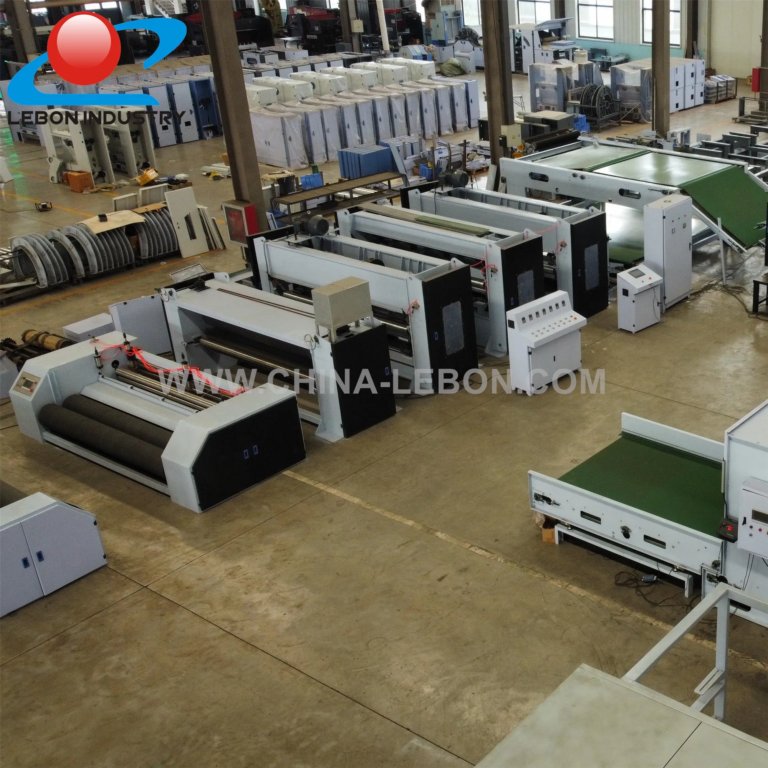
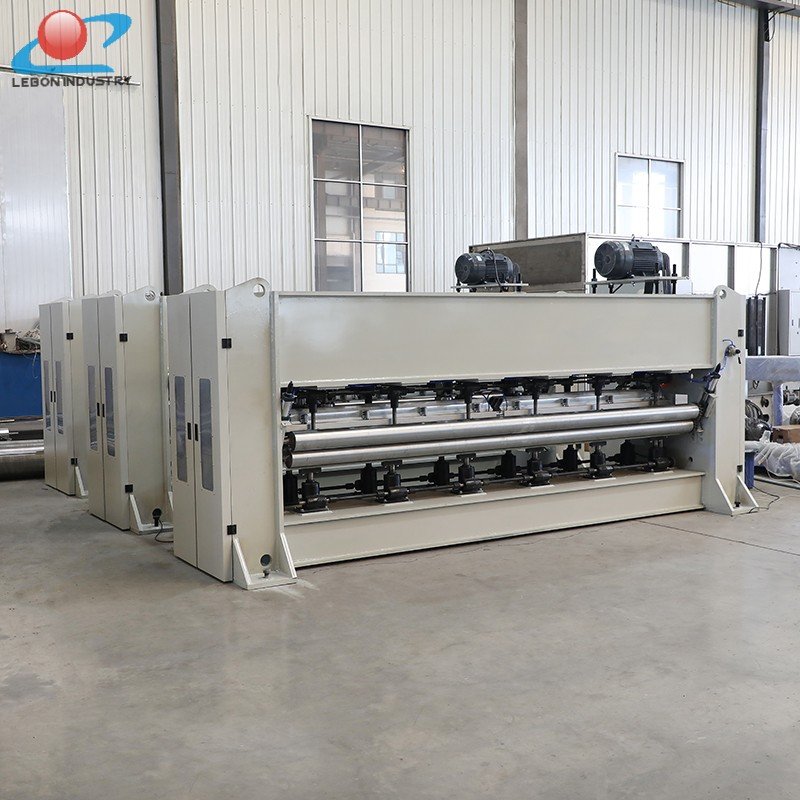
The needle punching machine is the cornerstone of nonwoven fabric production for filtration and countless other applications. Understanding its operating principle is key to appreciating why needle-punched media is so widely adopted.
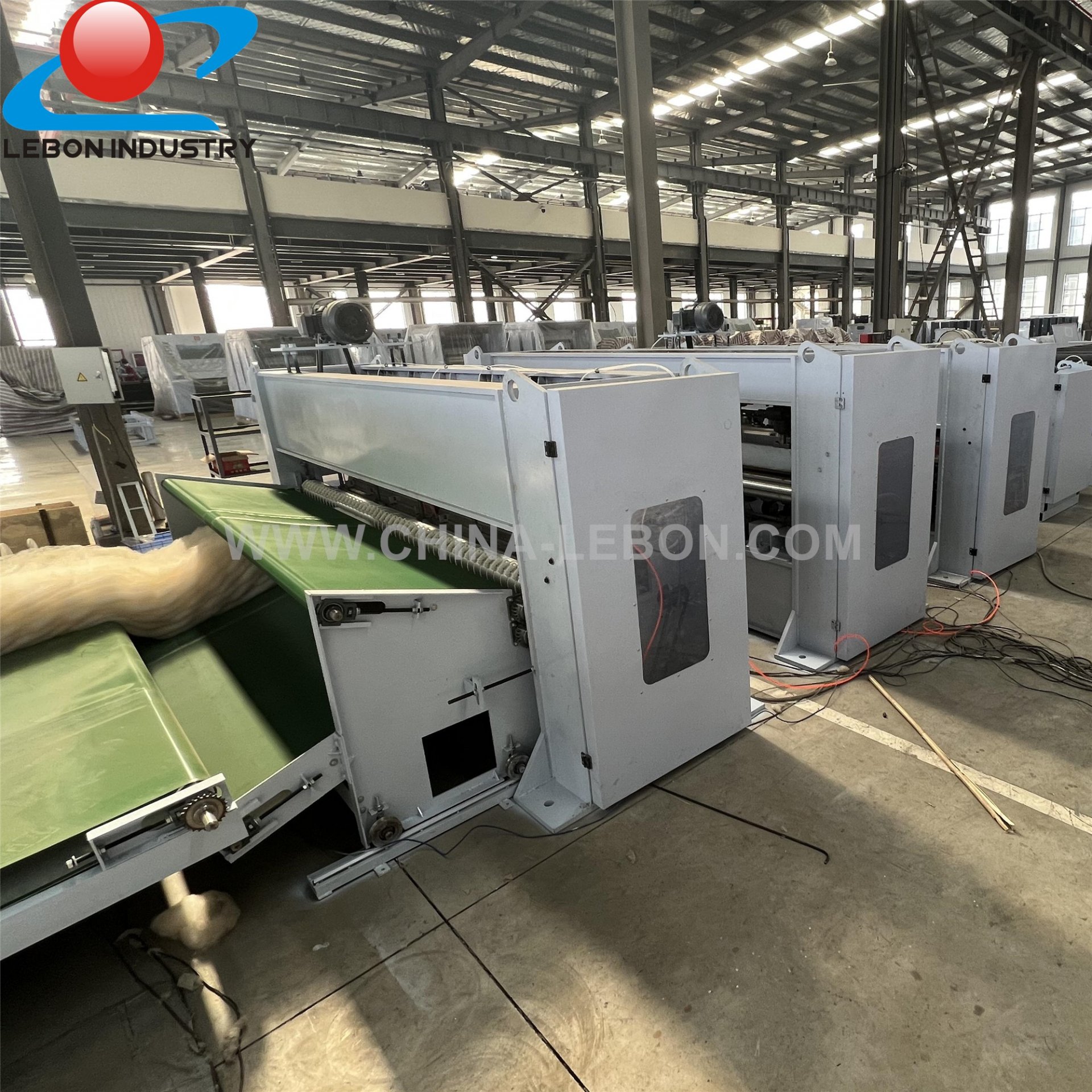
The process begins with a fiber web—produced by cross-lapping or air-laying machines—that is fed into the needle punching machine in a loose, fluffy state. At this initial stage, the web possesses minimal structural strength, relying only on the natural cohesion and friction between individual fibers.
The machine is equipped with specialized needles featuring triangular or other shaped cross-sections, with barbs (also called hooks) along their edges. As multiple needles repeatedly penetrate the fiber web at high speed, the barbs catch fibers from the surface and sub-surface layers, driving them from the horizontal plane of the web into the vertical direction.
This vertical fiber displacement causes the fibers to interlock and entangle, compressing the web and dramatically increasing its density, structural integrity, and mechanical strength. The result is a robust, dimensionally stable nonwoven fabric—ideal for demanding filtration applications where durability and consistent performance are essential.
Key process parameters that can be fine-tuned include:
- Needling density (punctures per unit area)
- Penetration depth (how far the needles travel into the web)
- Needle type and barb configuration
- Number of needling passes
By adjusting these parameters, manufacturers can precisely tailor the fabric’s density, thickness, permeability, and strength to meet specific end-use requirements.
Broad Applications of Needle-Punched Nonwoven Materials
Beyond high-temperature filtration, needle-punched nonwoven materials find applications across a remarkably diverse spectrum of industries and products:
- Home & Commercial: Carpets, decorative felts, mattresses, furniture cushions, and ironing pads
- Apparel & Accessories: Shoe and hat felts, shoulder pads
- Sports & Recreation: Sports mats and cushioning pads
- Industrial: Synthetic leather substrates, coating base fabrics, oil felt substrates, papermaking felts, geotextiles, and sound and thermal insulation materials
- Medical: Wound dressings and artificial blood vessels
- Automotive: Interior decorative materials, thermal insulation, and acoustic dampening
- Specialized: Heat conduit sleeves and filtration materials
This versatility underscores the importance of needle punching technology as a foundational process in modern nonwoven manufacturing.
Why Needle-Punched Filtration Products Excel in Industrial Settings
Needle-punched filtration products offer several distinct advantages that make them particularly well-suited for industrial high-temperature applications:
- Customizable density and thickness: The needling process allows precise control over fabric density and thickness, enabling manufacturers to optimize the balance between filtration efficiency and airflow resistance for each specific application.
- Excellent mechanical strength: The deep fiber entanglement created during needle punching produces a strong, durable fabric that can withstand the rigors of industrial operation, including aggressive pulse-jet cleaning and mechanical vibration.
- Chemical and thermal stability: When combined with high-performance fibers such as PETT and ultra-fine glass fiber, needle-punched media delivers reliable, long-term performance in the most aggressive industrial environments.
- Cost-effective production: Needle punching is a comparatively efficient and scalable manufacturing process, helping to keep production costs manageable even for premium high-performance filter media.
- Seamless integration with support layers: Needle-punched media can be effectively combined with woven scrims or support fabrics to create reinforced composite filter media for applications requiring additional dimensional stability.
Frequently Asked Questions (FAQ)
What is a needle punching machine?
A needle punching machine is a nonwoven manufacturing device that uses barbed needles to repeatedly penetrate and entangle fibers within a loose fiber web, mechanically transforming it into a strong, stable, and dimensionally consistent fabric.
What temperature can needle-punched high-temperature filter media withstand?
Depending on the fiber composition, needle-punched high-temperature filter media can operate continuously at temperatures ranging from 150°C to over 260°C. Blends of PETT and glass fiber offer the highest thermal resistance in this category.
Why blend PETT fiber with ultra-fine glass fiber?
Blending PETT with ultra-fine glass fiber maintains excellent temperature and chemical resistance while improving filtration efficiency and reducing overall material costs—delivering a more practical, economical, and high-performing filtration solution.
Which industries use needle-punched high-temperature filtration products?
These products are widely used in power generation, cement manufacturing, steel production, waste incineration, chemical processing, and other industries that generate high-temperature, particulate-laden gas streams requiring effective emissions control.
How long do needle-punched high-temperature filter bags last?
Service life varies based on operating conditions, gas composition, and fiber type. PETT-glass fiber blended media typically offers a longer service life than single-fiber alternatives, often exceeding two to three years under normal operating conditions.
Conclusion
Needle punching machines play a pivotal role in the production of high-temperature filtration products, enabling the creation of durable, high-performance filter media from advanced fibers. While each high-performance fiber—glass, Nomex, P84, PPS, and PETT—has its own strengths and limitations, innovative blended solutions such as PETT combined with ultra-fine glass fiber offer a compelling answer that balances performance, cost, and longevity.
As industrial emission standards continue to tighten worldwide and operating environments become increasingly demanding, the continued advancement of needle punching technology and fiber engineering will remain essential to meeting the filtration challenges of the future. For facilities seeking reliable, cost-effective, and long-lasting high-temperature filtration solutions, needle-punched media reinforced with optimized fiber blends represents a proven and forward-looking choice.