
Introduction: A Decision That Shapes Your Mill’s Future
Buying equipment is one of the biggest decisions for any textile mill. Many mill owners face a common dilemma. Should they buy new machinery or consider used textile machinery? The answer is not always simple. New equipment offers reliability and support. However, used textile machinery costs much less upfront. Therefore, you need a careful cost-benefit analysis. This article compares both options across several key factors. By the end, you will know which choice fits your business goals.
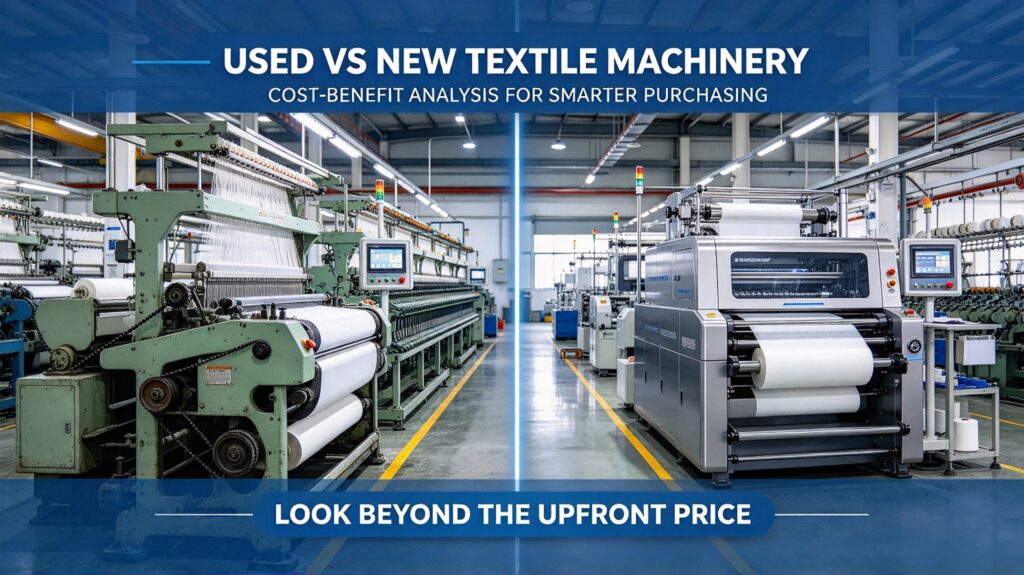
Why Used Textile Machinery Attracts Budget-Conscious Buyers
The main appeal of used textile machinery is the lower purchase price. A used machine can cost 40% to 60% less than a new one. For mills with tight budgets, this is a major advantage. Moreover, used equipment is often available immediately. You avoid long lead times for new machine delivery. In addition, some well-maintained used machines still perform reliably for many years. Consequently, many small and medium mills start with used textile machinery to reduce initial investment.
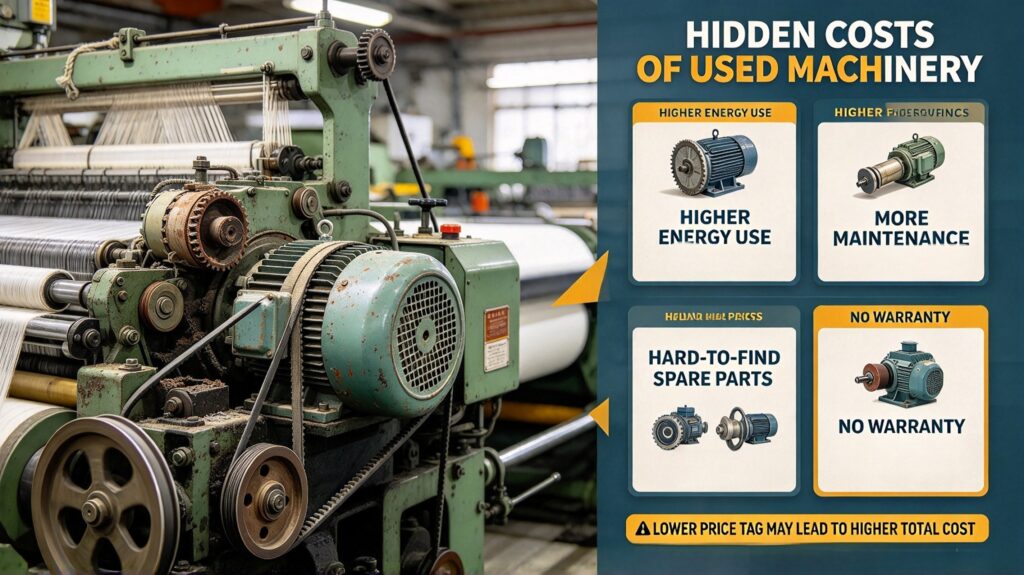
The Hidden Costs of Used Textile Machinery
However, the lower price tag does not tell the full story. Used textile machinery often comes with hidden costs. First, older machines usually consume more energy. A 15-year-old motor may use 20% more electricity than a modern equivalent. Second, maintenance frequency is higher. Worn parts fail more often. Third, spare parts may be hard to find. Some models are discontinued, forcing you to order custom-made parts. Fourth, there is no warranty. Every breakdown becomes an immediate expense. Therefore, you must factor these costs into your decision.
New Textile Machinery: Higher Investment, Lower Risk
New equipment requires a larger upfront investment. In return, it offers clear advantages. First, new machines are more energy-efficient. They often use 15% to 30% less power than older models. Second, they come with a warranty. The manufacturer covers defects and provides support. Third, spare parts are readily available. Fourth, modern machines include advanced controls, automation, and safety features. These features improve product quality and reduce labor costs. Consequently, new equipment often delivers a lower total cost of ownership over five to ten years.
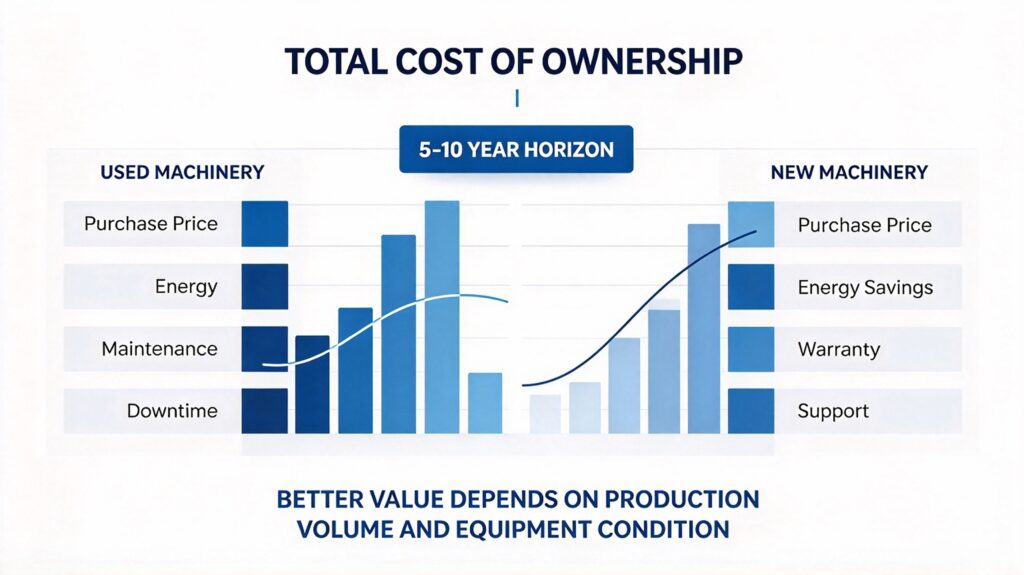
Comparing Total Cost of Ownership
To make a fair comparison, calculate the total cost of ownership for both options. Include the purchase price, installation, energy costs, maintenance, spare parts, and downtime. For used textile machinery, add the cost of expected repairs and potential production losses. For new equipment, include the higher purchase price but lower operating costs. In many cases, the total cost of ownership favors new machinery. However, this depends on your production volume and the age of the used equipment. Therefore, run the numbers for your specific situation.
When Used Textile Machinery Makes Sense
Used equipment is not always a bad choice. It can be a smart option in certain situations. First, if your budget is very limited and you need to start production quickly. Second, if the used machine is in excellent condition and comes with maintenance records. Third, if you need a backup machine for peak periods. Fourth, if the machine model is still supported by the manufacturer. Fifth, if your target market does not require the latest technology. In these cases, used textile machinery can deliver good value.
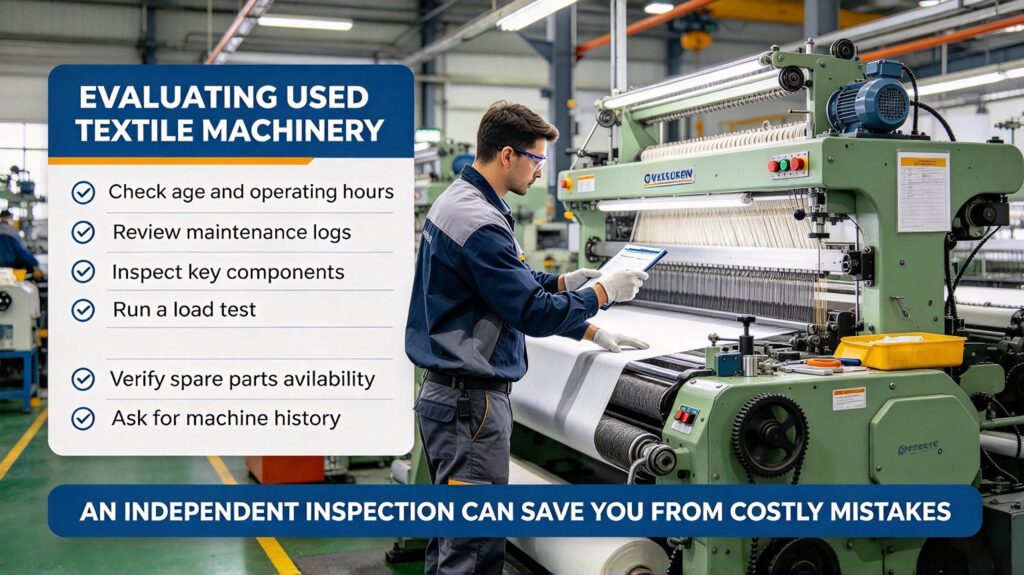
A Practical Checklist for Evaluating Used Textile Machinery
If you decide to buy used equipment, follow a careful inspection process. First, check the machine’s age and operating hours. Second, review maintenance logs. Third, inspect key components for wear. Fourth, run the machine under load. Fifth, verify that spare parts are available. Sixth, ask about the machine’s history. Was it used in a clean environment? Was it maintained by trained technicians? Finally, get an independent inspection if possible. A small inspection fee can save you from a costly mistake.
Conclusion: Choose Based on Total Value, Not Just Price
The choice between used and new textile machinery depends on your specific situation. Used equipment offers lower upfront costs but higher risks and operating expenses. New equipment requires more capital but delivers reliability, efficiency, and support. Therefore, do not decide based on price alone. Calculate the total cost of ownership. Evaluate your production needs and market requirements. Then choose the option that delivers the best long-term value for your mill.
We supply new textile machinery with full warranty, training, and spare parts support. Our team can also help you evaluate trade-in options. Contact us to discuss the right equipment strategy for your business.
Ready to make a smart equipment purchase? Ask us for a personalized cost-benefit analysis.