Introduction: Why Is Fire Prevention Critical in Cotton Spinning?
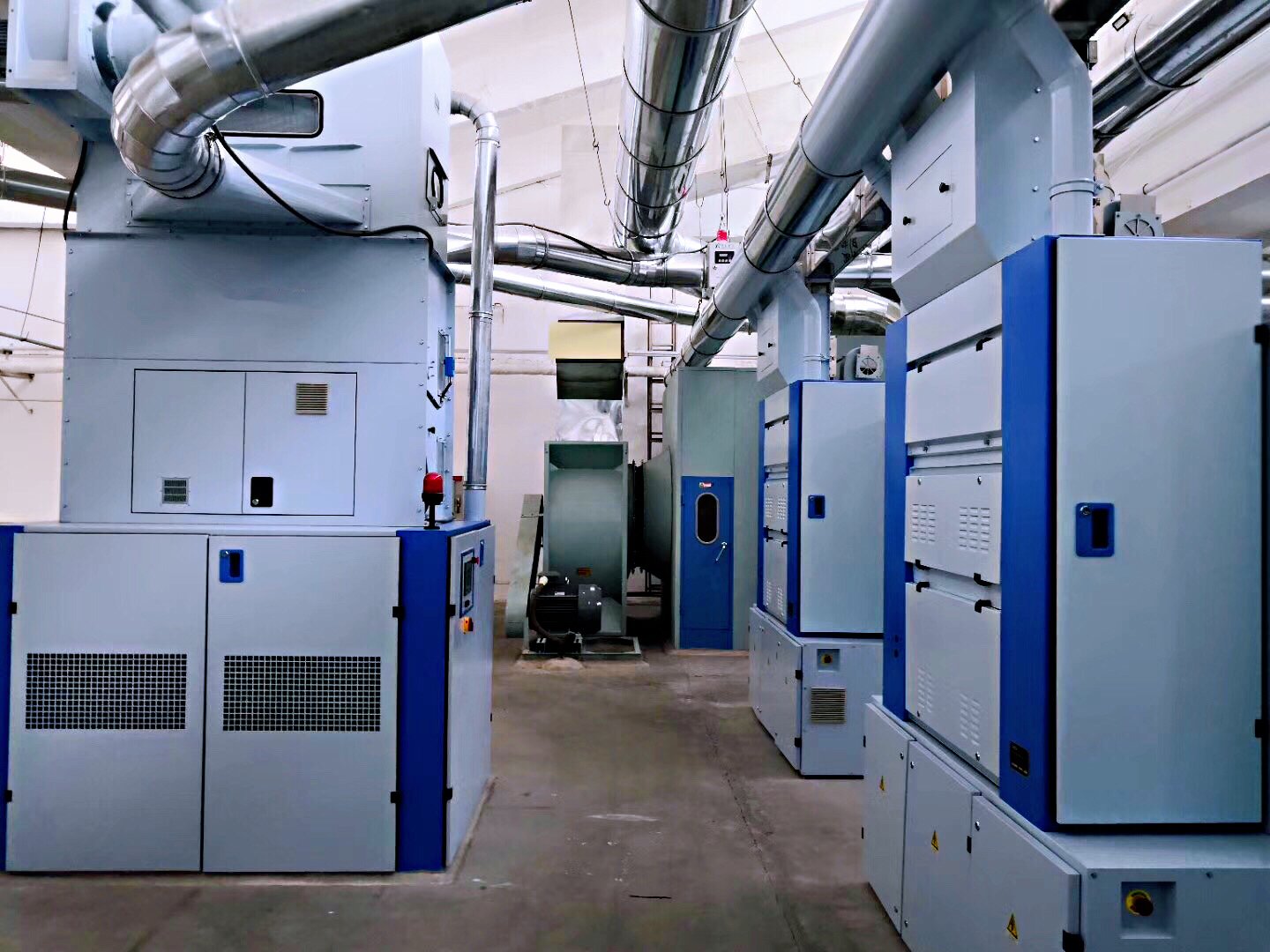
Fire prevention is a critical part of safe and reliable operation in cotton spinning mills. Modern spinning factories increasingly use high-speed machinery, automated material handling systems, and continuous pneumatic conveying. Although these technologies improve productivity, they also create potential fire hazards when combustible cotton fibers come into contact with overheated components, sparks, or foreign metal objects.
The blowroom and carding sections deserve particular attention because raw cotton contains combustible fibers, while high-speed rotating components generate friction during normal operation. Metal contamination, damaged machine parts, excessive fiber accumulation, and inadequate maintenance can increase the risk of ignition.
Once a spark enters a cotton conveying pipeline or dust collection system, it may spread rapidly through the production line. Without reliable detection, automatic shutdown, and timely intervention, a small ignition source can develop into a serious fire.
Effective fire prevention requires a systematic approach combining machinery maintenance, spark detection, foreign-object removal, operator training, electrical interlocking, and emergency response procedures.
This guide outlines practical fire prevention measures for blowroom and carding lines to help spinning mills improve equipment reliability and maintain safer production conditions.
1. Typical Blowroom and Carding Line Configuration
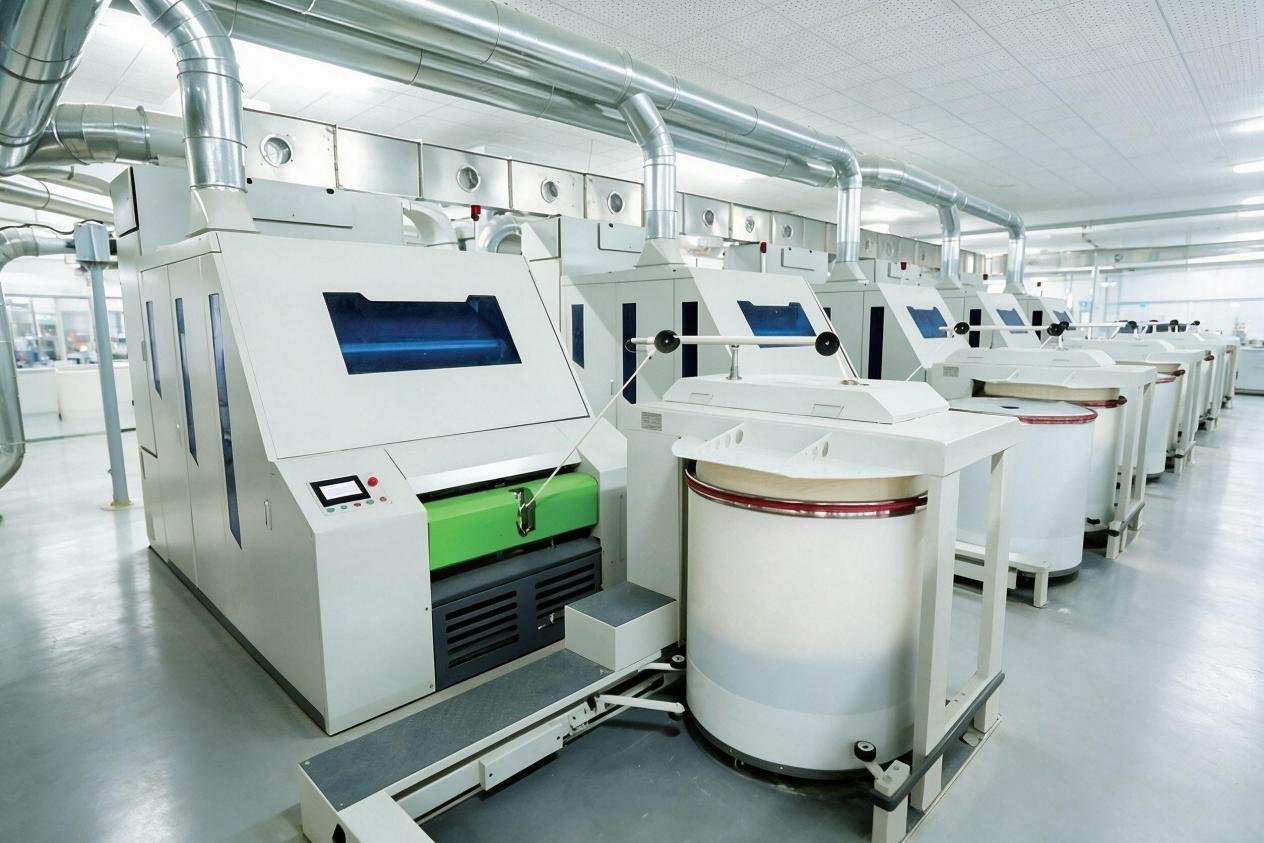
A representative cotton blowroom and carding line may include the following equipment:
- Reciprocating Bale Plucker
- Cotton Conveying Fan
- Integrated Metal, Spark, and Heavy-Impurity Detector
- Heavy Impurity Separator
- Single-Axial-Flow Opener
- Multi-Mixer
- Fine Opener
- Foreign-Fiber Removal Machine
- Microdust Removal Machine
- High-Production Carding Machine
The actual configuration varies according to raw material, production capacity, and mill requirements.
Because cotton passes through multiple opening, cleaning, conveying, and carding stages, fire prevention must cover the entire production line rather than relying on a single detector or machine.
2. Fire Prevention Measures for Blowroom Equipment
2.1 Reciprocating Bale Plucker
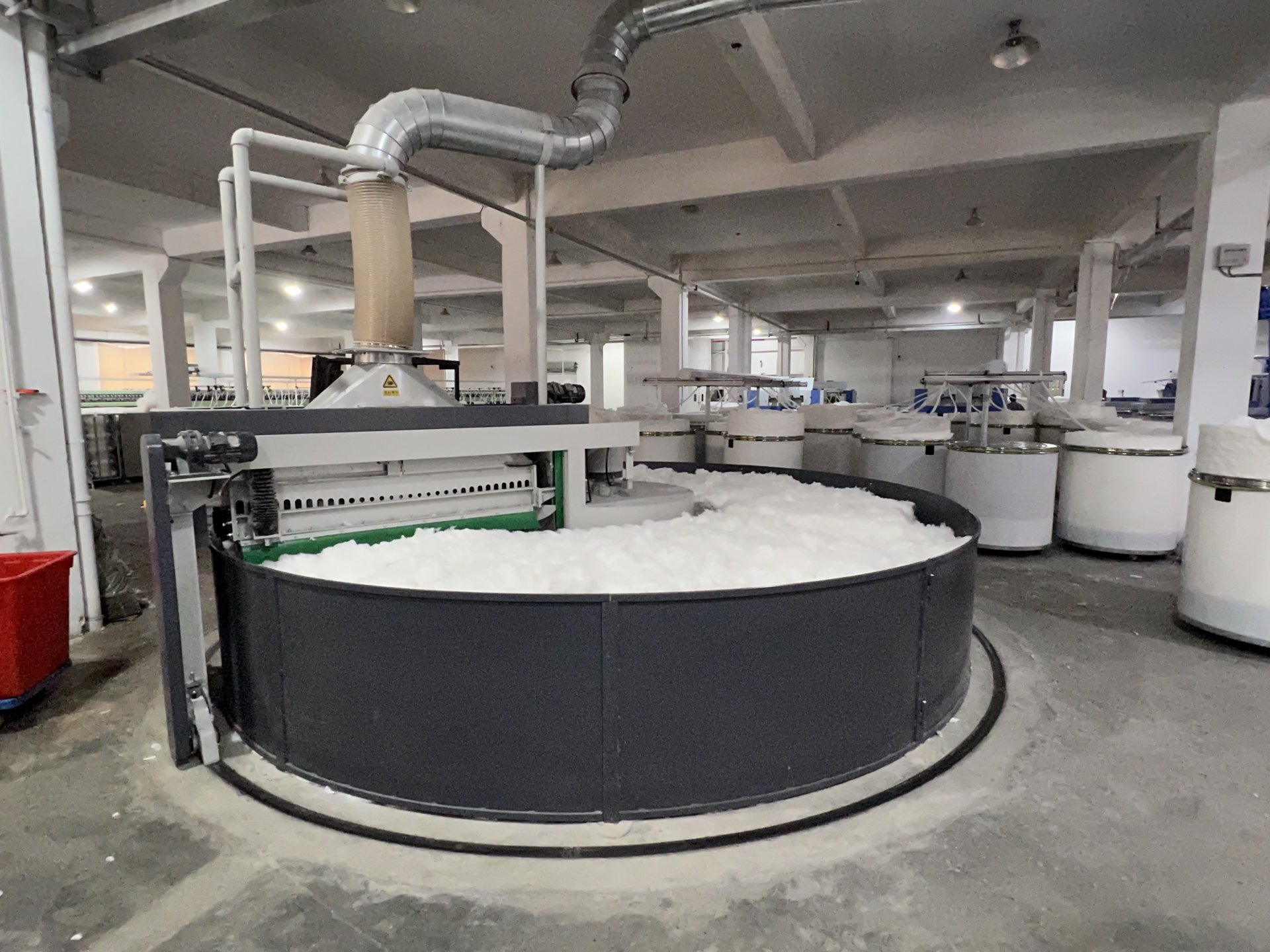
The bale plucker is the first major opening machine in the blowroom line. Its rotating beater roller removes cotton from the bales, and the loosened fibers are conveyed pneumatically to the next machine.
In the referenced installation, the beater roller can operate at speeds of up to 1,219 rpm. Contact between metal objects and rotating components can generate sparks or abnormal friction.
To reduce this risk, the machine incorporates an insulation-based metal-contact detection arrangement between the beater roller and its grid bars. When metal contact changes the electrical condition of the detection circuit, the signal is transmitted to the PLC to stop the machine.
Recommended maintenance measures include:
- Test the metal-contact detection function weekly.
- Check detection wiring and connections during routine machine cleaning.
- Inspect the beater roller and grid bars for damage, abnormal contact, or deformation.
- Remove metal contamination from the bale-plucking area before operation.
Detection systems should be tested according to the manufacturer’s instructions to ensure that metal contact triggers the intended shutdown response.
2.2 Cotton Conveying Fan
The conveying fan uses a variable-frequency drive to regulate fan speed, with a maximum speed of approximately 2,900 rpm in the referenced installation.
Fan blades can accumulate cotton fibers, develop surface burrs, or become damaged. These conditions may increase friction, cause fiber wrapping, or lead to localized overheating.
Maintenance personnel should inspect the fan blades at least weekly, checking for burrs, deformation, fiber buildup, and abnormal wear. Any defects should be corrected before they lead to more serious problems.
The fan housing, bearings, and drive system should also be checked for abnormal vibration, temperature, and noise.
2.3 Integrated Metal, Spark, and Heavy-Impurity Detector
The unit helps identify hazardous metal, sparks, and heavy impurities before they travel further into the production line.
Correct installation and regular functional testing are essential.
Installation distance: In the referenced application, when conveying-air velocity is approximately 10–20 m/s, the distance between the metal detector and the waste-discharge box is set at approximately 3.0–4.5 m. Actual installation distance must be confirmed against the detector manufacturer’s specifications, conveying conditions, and required response time.
Detection sensitivity: Check the spark detection function and waste-discharge flap weekly. The sensitivity should be selected according to raw material characteristics and operating conditions. The original installation uses automatic A2 mode as its highest sensitivity setting, with manual sensitivity settings above 90% where applicable.
Pneumatic pressure: Maintain the operating pressure within the specified range. The referenced system uses approximately 0.6–0.8 MPa to ensure reliable flap movement.
Air quality: Clean the air-line filter and water separator monthly, or more frequently if required, to prevent contamination from affecting pneumatic valves.
Reliable detection must be supported by an effective discharge mechanism. A detector that identifies a spark but cannot remove the hazardous material promptly cannot provide adequate protection on its own.
2.4 Heavy Impurity Separator
The heavy impurity separator uses airflow and centrifugal effects to separate contaminants heavier than cotton fibers. Its grid bars and waste-discharge arrangement help remove heavy particles before they reach downstream machinery.
The grid-bar spacing should be selected to encourage large and heavy impurities to fall out early in the process.
Air-inlet adjustment is equally important. Excessive or poorly directed airflow can cause contaminants to remain attached to the grid bars or become trapped in the airflow, preventing effective discharge.
Operators should regularly check the waste-discharge area and ensure that metal fragments and heavy contaminants are removed before they enter subsequent machines.
2.5 Single-Axial-Flow Opener
The opener uses a spiked roller operating at approximately 480 rpm in the referenced installation to loosen fiber tufts and remove impurities.
Its V-shaped pins require particular attention during maintenance.
Inspect the pins weekly for deformation, misalignment, looseness, or breakage. Damaged pins should be adjusted or replaced promptly.
A broken metal pin may travel downstream and create a hazard if it contacts another rotating component. Preventive inspection therefore plays an important role in protecting downstream equipment.
2.6 Multi-Mixer
The multi-mixer blends and temporarily stores cotton before it enters subsequent processing stages.
A spark entering the feed pipeline can create a fire risk inside the cotton storage area. In the referenced installation, an fire detection device is fitted to the feeding pipeline to trigger an alarm and stop the equipment when a spark is detected.
Check the detector head weekly for scratches, contamination, or obstruction. Its sensing surface must remain clean and correctly positioned.
The detector, alarm, and shutdown functions should be tested periodically as part of the plant’s preventive maintenance program.
2.7 Microdust Removal Machine
Cotton fibers can accumulate on the fan impeller and machine wall panels, especially where airflow or fiber separation is unstable.
Fiber buildup may increase friction, obstruct airflow, and contribute to localized overheating.
Inspect the impeller, housing, and surrounding areas weekly, removing accumulated fibers and investigating any repeated buildup. Abnormal vibration, noise, and temperature should also be checked.
2.8 High-Production Carding Machine
The carding machine operates at high production speeds. Its fire risk requires particular attention because the cylinder, doffer, flats, and other components operate with carefully controlled clearances.
Several factors may contribute to overheating or ignition.
1. Thermal expansion and incorrect machine clearances
During continuous operation, metal components heat up and expand. Different wall materials have different thermal expansion coefficients, which can change the working clearances between carding components.
In the referenced installation, aluminum and cast-iron wall materials have reported expansion coefficients of approximately 23.8 and 10.2, respectively, using a common engineering scale. After three to four hours of high-speed operation, the affected clearances may decrease by approximately 0.03–0.05 mm.
These figures are installation-specific examples, not universal settings. The correct cold and hot clearances must be established according to the machine manufacturer’s specifications, material construction, operating speed, and temperature conditions.
If clearances become too small, needle clothing may contact or excessively rub against opposing components, increasing friction and ignition risk.
2. Worn or insufficiently sharp card clothing
Worn cylinder and flat clothing may lose their original tooth geometry and fiber-control capability. This can increase fiber accumulation, repeated rubbing, and localized heating.
Inspect the clothing condition regularly. Replace or recondition clothing when its condition no longer supports stable carding.
If multiple machines cannot be re-clothed simultaneously, production speed may need to be adjusted according to clothing condition and sliver quality. Machines with significantly worn clothing should not continue operating at high speed simply to maintain output.
3. Excessive card clothing load
Higher tooth density does not automatically produce better carding results.
Excessively dense clothing may increase the load on individual teeth and restrict fiber transfer, particularly when combined with high production rates and heavy feed material.
Select clothing according to fiber characteristics, production requirements, and machine design. The objective is to achieve effective fiber control without excessive mechanical loading.
4. Worn flat heel-and-toe surfaces
Wear on the flat heel-and-toe surfaces can alter the working clearance between the flats and cylinder. Uneven wear may lead to poor flat alignment and, in severe cases, needle-to-needle contact.
In the referenced installation, the contact width between the flat heel-and-toe surface and the guide track is controlled at approximately 3.2 ± 0.2 mm. Flat belt tension is maintained at around 2.5 daN. When heel-and-toe wear exceeds 4 mm, the affected flats should be removed for regrinding.
These values must be checked against the applicable machine documentation before use on other carding machines.
5. Incorrect flexible clothing and cleaning settings
Flexible clothing assists in removing fibers from the flats. If the cleaning wire height is too high, contact with the protective cover may generate friction and heat. If it is too low, waste fibers may not be removed effectively and can accumulate around the cleaning rollers.
Set the cleaning-wire height according to the machine manufacturer’s instructions. Inspect cleaning rollers, protective covers, and fiber accumulation regularly.
6. Excessively tight carding clearances
Close carding clearances can improve fiber opening and help reduce neps, but excessively tight settings can accelerate clothing wear and increase friction.
Under high-speed, high-production conditions, poor fiber transfer combined with insufficient clearance may lead to overheating.
Working clearances must therefore be selected according to the required output, machine speed, raw material, and clothing condition. Any signs of abnormal heating, metallic contact, or unusual noise require immediate investigation.
3. Fire Prevention Through Operator Practices
3.1 Daily Responsibilities of Blowroom Operators
Blowroom operators should follow a simple principle: frequent inspection and regular cleaning.
Key responsibilities include:
- Clean bridge magnets: Remove collected metal contaminants at every shift handover. Additional magnets may be considered where raw cotton contains unusually high levels of metal contamination, subject to the system design.
- Empty heavy-impurity waste boxes: Prevent blockages that could stop metal and heavy particles from being discharged.
- Clean the waste box: Excessive waste accumulation can interfere with flap operation.
- Monitor foreign-fiber collection bags: Mark the maximum permitted fill level and empty the bag before waste reaches the limit specified by the equipment manufacturer.
- Respond to abnormal conditions: Investigate unusual smells, noise, vibration, or temperature immediately.
Cleaning should follow approved shutdown and isolation procedures. Operators must never reach into moving machinery or bypass protective devices.
3.2 Precautions During Cotton Bale Opening
Bale-opening operators must remove packaging materials carefully before cotton enters the machine.
Plastic strapping, iron wire, cutting-tool fragments, and other foreign objects must not enter the bale-plucking area.
Used cutting tools and wire cutters should be stored safely after use. The bottom of the bale platform should be checked for metal objects and other contaminants.
When recycled cotton strips are reused, they should be properly prepared into compact bundles. In the referenced production practice, strip lengths are limited to approximately 15 cm to reduce wrapping around the bale-plucker roller. Actual limits should follow the machine manufacturer’s recommendations and the mill’s validated process.
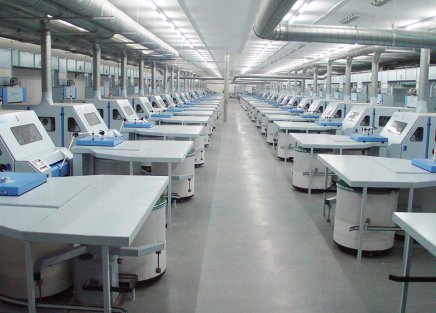
3.3 Precautions for Carding-Machine Operators
At every shift handover, operators should clean critical areas, especially the web-cleaning system and taker-in waste outlet.
Fiber accumulation in these areas can interfere with waste removal and contribute to overheating.
Operators should also inspect the machine regularly and confirm that the equipment stops correctly when a sliver break or other monitored fault occurs.
If a machine continues running under an abnormal condition, friction can develop around the calender rollers or other moving components. Stop the machine and investigate the cause rather than allowing the defect to continue.
4. Fire Prevention in Dust Collection Systems
Dust collection systems handle large quantities of cotton fibers and airborne waste. Their filters, pipelines, fans, and compactors must be maintained carefully to reduce ignition risks.
For the referenced system, the first-stage filter uses an 80-mesh steel screen. The screen should be inspected daily for holes, damage, or signs of burning. Damaged screens must be repaired or replaced promptly.
Blackened areas on the filter may indicate exposure to hot particles or burning fibers. Mark the affected locations and investigate the upstream carding machines and conveying system before restarting production.
The referenced installation also uses an fire detector positioned at a prepared opening in the cotton conveying pipeline between the dust collection unit and the compactor.
The original setup specifies a smooth, burr-free opening of approximately 22.5 mm, detector sensitivity above 95%, electrostatic filtering enabled, and automatic alarm reset disabled.
These are installation-specific settings and should not be copied to another system without confirmation from the detector manufacturer and qualified engineering personnel. Pipeline modifications must preserve structural integrity, airflow performance, and applicable safety requirements.
After an alarm, the equipment should remain stopped until the cause has been investigated, the affected area has been inspected, and the authorized reset procedure has been completed.
5. Electrical Interlocking and Fire Alarm Coordination
A coordinated alarm and shutdown system can prevent a localized ignition event from spreading through the production line.
In the referenced installation, the following devices are connected through an electrical interlocking arrangement:
- metal, spark, and heavy-impurity detector.
- fire detector on the multi-mixer feed pipeline.
- spark detector downstream of the microdust removal machine.
- fire detection devices serving the blowroom and carding dust collection systems.
When a detector activates, the interlocking system initiates the configured shutdown sequence, accompanied by visual and audible alarms.
The precise shutdown logic must be engineered according to the conveying layout, equipment response times, and fire protection design. All alarms, emergency stops, and interlocks should be tested regularly, and protective functions must never be bypassed during normal production.
6. Regular Fire Drills and Emergency Preparedness
Even a well-maintained production line requires a clear emergency response plan.
Fire drills should be conducted regularly, involving maintenance personnel, machine operators, supervisors, and the plant’s safety team.
Training should cover:
- Reporting alarms and communicating the location of a suspected fire.
- Safely stopping equipment and activating emergency procedures.
- Recognizing when an incident requires immediate evacuation.
- Using appropriate fire protection equipment only when personnel are trained and conditions permit.
- Following designated evacuation routes and assembly procedures.
- Inspecting the affected area and authorizing restart only after it has been confirmed safe.
The referenced factory conducts weekly emergency drills. Each mill should establish its own schedule based on risk assessments, local regulations, and operational requirements.
Conclusion: A Systematic Approach to Fire Prevention
Fire prevention in blowroom and carding lines requires coordinated action across machinery design, routine maintenance, raw material inspection, spark detection, dust collection, operator training, and electrical interlocking.
The most important priorities are to prevent metal contamination, eliminate abnormal friction, maintain correct carding clearances, keep fiber passages clean, verify detection systems, and ensure that alarms trigger the intended response.
No single detector or maintenance task can eliminate every fire risk. A reliable safety program combines preventive measures, regular testing, documented procedures, and continuous improvement.
Looking for reliable blowroom and carding machinery for your spinning mill?
Our textile machinery solutions are designed to support efficient fiber opening, impurity removal, and carding operations. Contact our team to discuss your production requirements, equipment configuration, and maintenance considerations.
Contact us today to learn more about our cotton spinning machinery and production line solutions.