Introduction: Listen to Your Machines
Every textile machine sends signals about its health. One of the most important signals is vibration. Textile machinery vibration monitoring catches small problems before they become major failures. Therefore, it is a powerful tool for any spinning, weaving, or nonwoven mill. This article explains why textile machinery vibration monitoring matters. It also shows you how to implement it step by step.


Why Textile Machinery Vibration Monitoring Matters
Rotating parts in textile machines create vibration. Bearings, gears, belts, and shafts all produce vibration patterns. When these parts wear out, the vibration changes. A bearing with a small crack creates a specific frequency. A misaligned shaft creates a different pattern. Textile machinery vibration monitoring detects these changes early. As a result, you can schedule repairs during planned downtime. You avoid unexpected breakdowns that stop production. In addition, you extend the life of expensive components like spindles and needle boards.
Common Vibration Sources in Textile Machinery
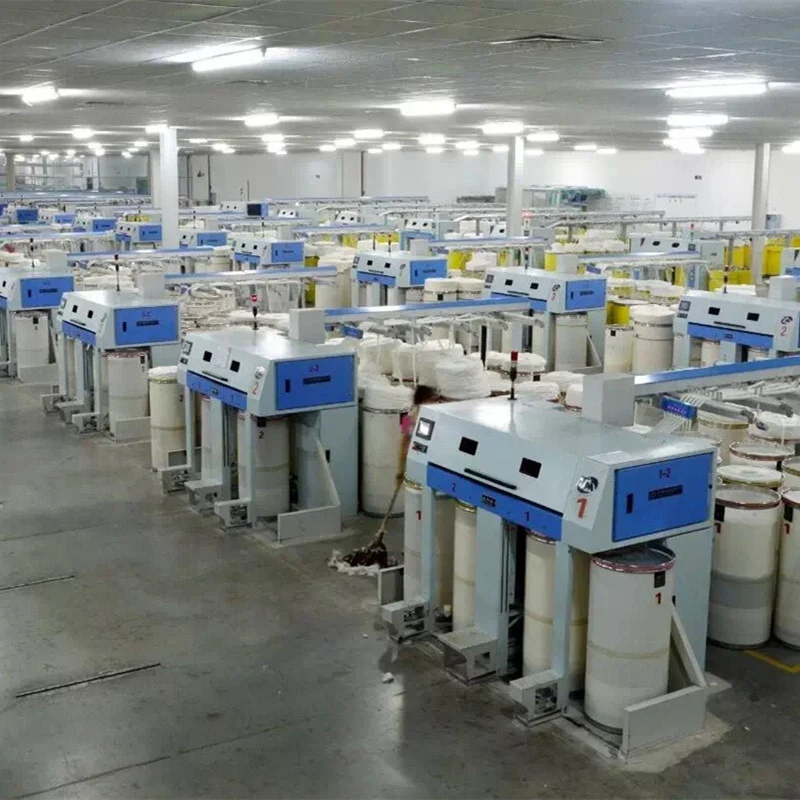
Different machines have different vibration sources. In ring spinning frames, the spindle and bolster are common sources. In rotor spinning, the rotor bearing is critical. In needle punch lines, the needle board and eccentric gearbox create vibration. In weaving machines, the main shaft and heald frames are key points. Therefore, textile machinery vibration monitoring must target the right components. You should focus on high-speed and high-load parts first.
How to Implement Textile Machinery Vibration Monitoring
You do not need a complex system to start. First, choose a method. Portable vibration meters work well for periodic checks. Online sensors work better for critical machines. Second, select measurement points. Place sensors on bearing housings and gearbox casings. Third, set a baseline. Measure vibration when the machine is new or freshly repaired. Fourth, take regular readings. Compare them to the baseline. Finally, trend the data over time. A gradual increase signals wear. A sudden spike signals damage.
Analyzing Vibration Data for Better Maintenance
Raw vibration numbers are not enough. You need to understand frequency patterns. For example, a peak at the bearing rotation frequency indicates imbalance. A peak at the gear mesh frequency indicates gear wear. Many modern systems use software to diagnose faults automatically. Therefore, textile machinery vibration monitoring becomes easier for non-experts. You can also use thermal imaging or oil analysis together with vibration data. This combination gives a complete picture of machine health.
Benefits and Return on Investment
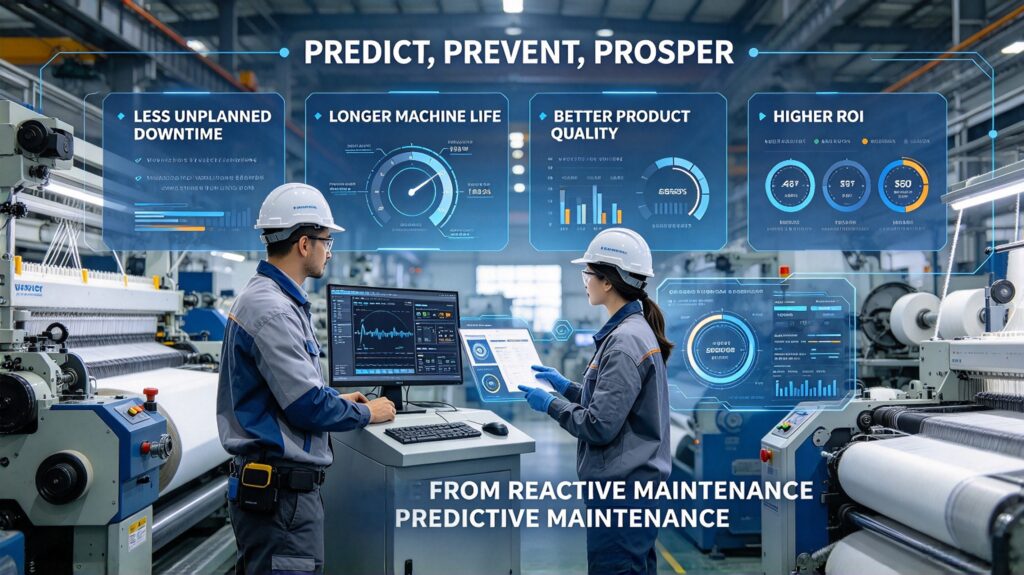
The benefits of textile machinery vibration monitoring are clear. First, you reduce unplanned downtime. Second, you avoid secondary damage to nearby parts. Third, you extend machine life. Fourth, you improve product quality because stable machines produce consistent yarn or fabric. The return on investment is often high. A single avoided breakdown can save thousands of dollars in lost production. Moreover, you can move from reactive maintenance to predictive maintenance. This shift is a key part of modern textile manufacturing.
Practical Steps to Get Started
Start small. Choose one critical machine, such as a carding machine or a needle loom. Install a portable vibration meter or a low-cost online sensor. Train one technician to take readings and record data. After one month, review the data. You will likely find at least one early warning sign. Fix that issue and measure the savings. Then expand to more machines. Over time, textile machinery vibration monitoring becomes part of your daily routine. It is not an expense; it is an investment in reliability.
Conclusion: Predict, Prevent, Prosper
Textile machinery vibration monitoring gives you the power to predict failures and prevent downtime. It works on spinning frames, needle looms, weaving machines, and more. Start with a simple portable tool. Build a baseline. Trend the data. Fix small problems early. As a result, your machines run longer, your quality improves, and your profits grow. Do not wait for a breakdown. Listen to your machines today.
We supply reliable textile machinery and support condition monitoring solutions. Contact us to learn how vibration monitoring can fit your mill.
Ready to reduce downtime? Ask us about vibration monitoring for your textile machines.